

“Man shall not live by bread alone, but by every word that comes from the mouth of God.” (Matt. 4:4)
The First Temptation: Bread Before Obedience
Jesus’ first task after he was baptized was to be thrust into the wilderness to fight the devil. Peter tells us that the adversary prowls like a roaring lion seeking someone to devour. In Matthew four, we hear the roar of the adversary versus the roar of the Messiah. The Messiah roars words of truth; the adversary roars words of deception.
Our Lord became man so that He might taste death for everyone, but before tasting death, He endured temptations, persecution, and scorn. The wilderness testing stands at the very heart of His ministry. If Jesus defeats the devil here, then all other accusations and temptations in His earthly ministry will also be defeated.

When our Lord is baptized, he is ordained into priestly work. In His first priestly task, Jesus is led by the Spirit into the wilderness. This serves as a reminder that baptism does not remove problems but introduces a mission. The Christian message is not “before Jesus, I had problems, but now with Jesus, I have no problems.” Rather, united to Jesus, we are secured and can properly respond to the problems that come my way.
In Matthew’s Gospel, Jesus is plunged into three particular temptations.
In the first, the tempter says, “If you are the Son of God, command these stones to become loaves of bread.” Matthew connects us to Genesis 3. In the Garden, the Serpent tempted Adam, and now the Tempter confronts the Second Adam. The strategies have not changed since the days in Eden. Once again, the devil seeks to devour the Second Adam by persuading Jesus to take His reward now.
The evil one is not merely asking Jesus to break His fast. There is more happening. In the Bible, stones represent death; a heart of stone does not seek resurrection (Ezek. 36:26). But bread means life — daily provision from the hand of God (Deut. 8:3; John 6:35). The Devil tempts Jesus to keep death away from His mission — to become King now without suffering (Matt. 16:21–23) — to seize life without passing through the cross.
Jesus answers from Deuteronomy:
“Man shall not live by bread alone, but by every word that comes from the mouth of God.”
For Jesus, faithfulness precedes food. There will be bread, and He Himself will become Bread for the world. His body will be given — His body broken and crucified. There are no shortcuts to life. Conformity to God’s Word demands speaking the Word when temptations come. We must fast so that later we may feast. The Kingdom comes through sacrifice. And Jesus knows that he must stand firm in his mission.
The Second Temptation: Protection Without Trust
From the wilderness, the devil takes Jesus to the holy city, to the pinnacle of the temple, and quotes Psalm 91. He twists Scripture while appearing to honor it and asks why Jesus should not throw Himself down to prove the Father’s protection.
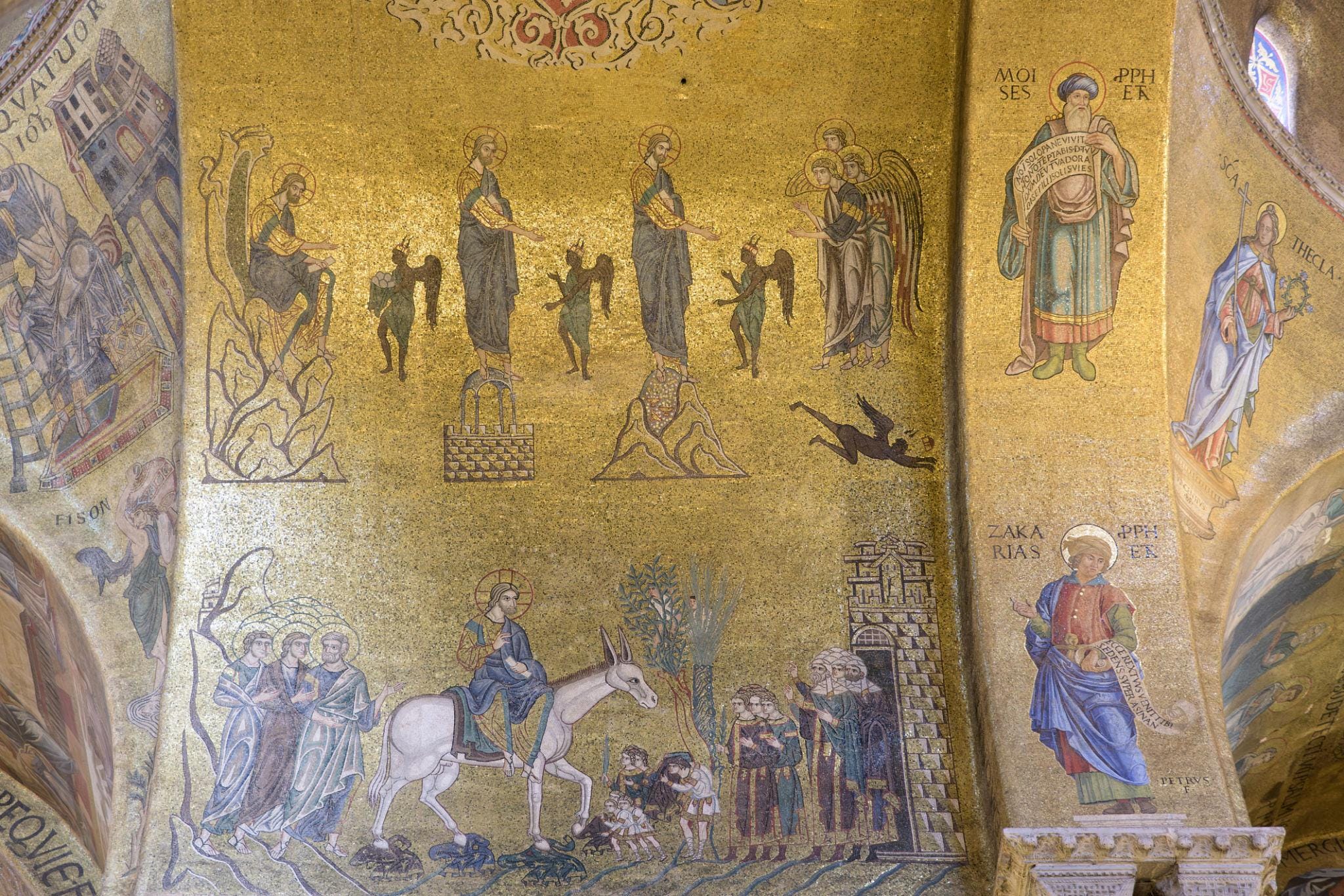
Again, the temptation is to avoid tribulation. The promise of Psalm 91 belongs to those who abide under the shadow of the Almighty, not to those who thrust themselves out from under His wings. The devil invites Jesus to test God and force divine action; to compel the Father to intervene and short-circuit His mission.
Jesus responds:
“You shall not put the Lord your God to the test.”
Israel tested God in the wilderness by demanding provision on their terms. Testing God means refusing to trust Him to provide at the right time.
Jesus knows He will be driven out of the city and crucified, and that the Father will vindicate Him in the resurrection. Yet He will not manufacture deliverance or escape suffering. He waits upon the Father’s timing, showing us how to read Scripture faithfully and how to resist the devil.
The Third Temptation: Glory Without the Cross
Finally, the devil takes Jesus to a very high mountain and shows Him all the kingdoms of the world and their glory, saying, “All these I will give you if you fall down and worship me.” It is significant that the devil takes Jesus up to the mountains. Mountains are places of worship, and this is the culmination of the temptations. It’s the biggest offer!
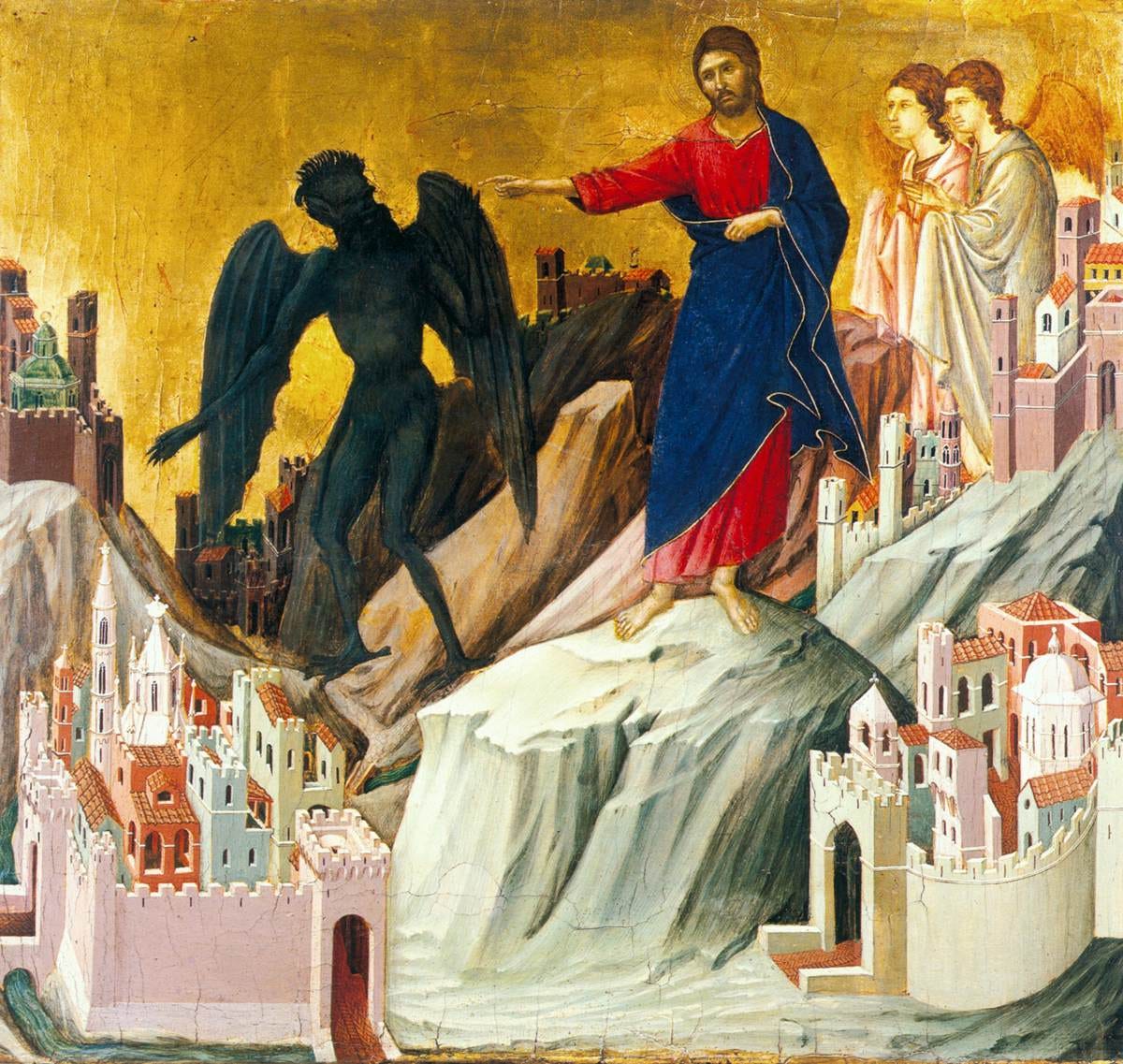
Jesus will indeed receive the kingdoms — but the giver is the Father, not Satan. The issue again is timing: suffering precedes glory.
Jesus declares: “Be gone, Satan! You shall worship the Lord your God and Him only shall you serve.”
Jesus is functioning as a priest, excommunicating Satan from the holy place. The adversary is silenced. Angels minister to Christ as He moves from humiliation toward exaltation, and the devil departs for a season.
All three temptations share the same theme: the promise of reward before the proper time. The Garden sin was possessing without approval, but in the wilderness, Jesus becomes the faithful Adam.
We will be tempted during this season to want it all now. Yet in waiting patiently, we learn God is with us in testing. Because Jesus defeated the devil, united to Him, we too may say during this Lenten season:
Be gone, Satan — for we worship the Lord alone.
New Perspectivalist Episode
Perspectivalist Podcast — Season 7, Episode 2
In this episode, Uri Brito speaks with Pastor Levi Secord about the modern crisis of authority and why Christians instinctively sense that something is wrong when the state claims jurisdiction over education, family, morality, and worship.
Drawing from the historic doctrine of sphere sovereignty, Secord argues that God has established distinct spheres — family, church, and civil government — each with delegated authority under the lordship of Christ. When those boundaries collapse, the state becomes a functional god and citizens become its subjects.
The conversation explores: • why statism grows when societies reject God • how Scripture limits civil authority (Rom. 13; Matt. 22:21) • lessons learned from COVID-era overreach • why healthy families and churches restrain tyranny • and what cultural renewal would look like if Christians recovered a biblical doctrine of authority
At stake is a basic question: Is the state our savior — or God’s servant?
Levi Secord — Article Christ Over Every Crown (Kuyperian Commentary) https://kuyperian.com
Book Servant Not Savior: An Introduction to the Bible’s Teaching About Civil Government
A prudent reminder to us all as Christians.
"When our Lord is baptized, he is ordained into priestly work. In His first priestly task, Jesus is led by the Spirit into the wilderness. This serves as a reminder that baptism does not remove problems but introduces a mission. The Christian message is not “before Jesus, I had problems, but now with Jesus, I have no problems.” Rather, united to Jesus, we are secured and can properly respond to the problems that come my way."
As C.S. Lewis observed about religion. "I didn't go to religion to make me happy. I always knew a bottle of Port would do that. If you want a religion to make you feel comfortable, I certainly don't recommend Christianity."
When we see a baptismal ceremony, we ought to be reminded of our own. We ought to remember that everything that comes to us must pass through God's hands first. It's a beautiful reminder that Christ is with us through it all, which brings peace in the midst of any circumstance, storm or peace.
Wonderful! Thank YOU dear BRO in Christ Jesus of Nazareth! From Tana, Chris and The Clan, "Trinity Reformed Church" Beaverton, OR.!