Merry Christmas!
Christians have a long history of celebrating children. This legacy is one of the primary reasons even pagans could not consistently despise Christians in the ancient world. From the earliest centuries, believers were known for rescuing, adopting, and caring for little ones at every stage of life. That reputation did not emerge by accident. It flowed from conviction.
Where does this high view of children come from? Why do Christians oppose philosophers like Peter Singer, who argue that the life of a child is no different from the life of an animal? Why do Christians insist that the body of the Christ-Child is a temple of the Spirit?
Christmas is the Christian’s answer.
At Christmas, we celebrate the humanity of Christ, and in doing so, we recover the meaning of our own humanity. We are, after all, Christian humanists. By humanist, I do not mean a secular abstraction, but the reality created by the incarnation itself. The incarnation makes us truly human. For that reason, we ought not despise our humanity. In Christ, we are better human beings because we are united to the glorified human flesh of Jesus. As Stanley Hauerwas puts it, “Christians are humanists because God showed up in Mary’s belly. We are not an evolutionary accident. We are God’s chosen people.”
The Word Made Flesh and the Word Who Speaks
That calling carries responsibility. We are chosen humans sent into the world to make it more Christianly—more human. As Hauerwas reminds us, “We never escape the obligation to imitate the Incarnation.” To imitate the Incarnation is to become more and more like the Word made flesh and to shape the world around us with that Word. Wherever the curse is found, Christians proclaim the humanity of Jesus. We are conformed to the Word’s image so that we may announce the Word made flesh to the world.
This definition should not trouble Christians, but it increasingly troubles our culture. To insist that the Bible is our starting point is now considered madness. Christians do not reject classical categories or philosophical reasoning, but such tools must always remain secondary to the Word of God. We are Bible-centered people, and to be Bible-centered today is to invite misunderstanding. We will be labeled fundamentalists and intolerant. When the Church says, “Thus says the Lord,” the culture rushes to interrupt.
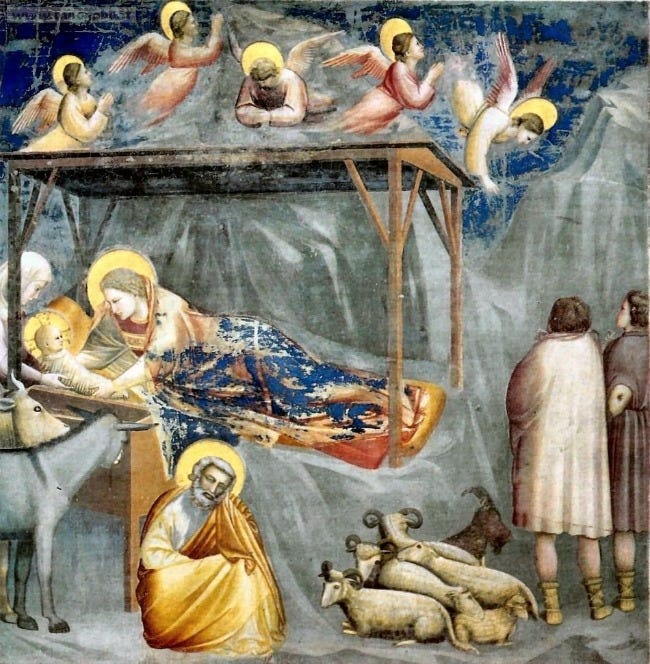
The reason is simple. Modern culture does not want a God who speaks. It prefers a forgiving God who never grows up, a God who never moves beyond the manger. Ultimately, it wants a silent God. But God is not silent! The opening words of Hebrews declare this plainly: “Long ago, at many times and in many ways, God spoke to our fathers by the prophets.”
The author of Hebrews insists that God has always spoken into history. The prophets proclaimed hope, a Messiah who would come and make all things new. God has never withdrawn His voice. That prophetic word was always pointing forward, preparing the way for the Word made flesh. The writer continues, “But in these last days he has spoken to us by his Son.” In the coming of Jesus, God speaks in a final and enduring way. Christian humanists therefore live in a word-shaped world. The Word came so that we might enter communion with the Word made flesh.
The Reigning Child and the Word We Live By
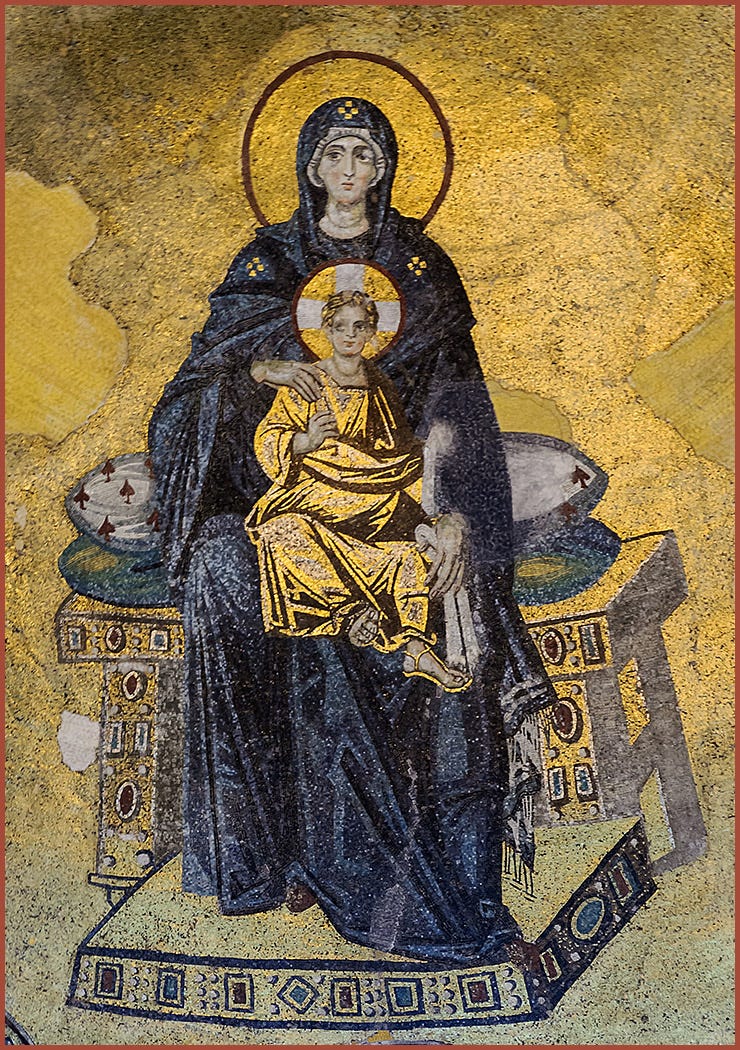
“These last days” began with Christ’s first coming. Jesus is the final prophet. Unlike the messengers who came again and again, this one speaks decisively because He is the perfect prophet. His coming is God’s final declaration to humanity. The canon is closed. We do not seek new revelation, but a deeper understanding of the revelation already given.
Yet Jesus is not only the final Word; He is the authoritative Word. Hebrews tells us that He is the heir of all things and the one who upholds the universe. As one pastor observed, without Him everything would vaporize into nothingness. The glory of the incarnation is that every time Jesus cried as an infant, His voice held the world together.
This truth exposes one of the great distortions of Christmas in much of evangelicalism: the worship of a tiny Christ, harmless and sentimental, but powerless. Hebrews offers a needed corrective. This child is “the radiance of the glory of God and the exact imprint of his nature.” He sustains all things by the word of His power. He is no paralyzed relic in a manger. He reigns.
Christ’s birth had a purpose. He was given a body capable of dying. The virgin birth makes sense only in light of mortality. Life and death meet in Jesus Christ. Having made purification for sins, He sat down at the right hand of the Majesty on high. Christmas is the Father declaring, “Listen to my Son. He is the heir of all things.” We do not wait for Christ to be King. Christ is King.
So how shall we live this Christmas season? Grounded in the Word made flesh. Dwelling richly in psalms, hymns, and spiritual songs. Becoming word-saturated people. John Bunyan once said that if you prick a Christian, his blood should be Bibline.
Draw near to the Word. Read it aloud. Sing it. Love it. Reject alternative words that despise the Word made flesh. Combat them with unashamed wonder at the human child who is the final Word of the Father.
Merry Christmas!
Advent Work-Out
Early Saturdays during Advent have been spent with these fellas receiving a proper beating at the gym.

Candidate Members
Our last inquirer’s class had around 30 candidates for membership at Providence! God is doing a great work!