

“It is winter in Narnia,” said Mr. Tumnus, “and has been for ever so long… always winter, but never Christmas.”
Always Winter, But Never Christmas
This sorrow expressed in the Chronicles of Narnia was a sorrow first described in the chronicles of the prophets. The prophet Isaiah was often seen proclaiming a message of perpetual winter for the dwellers of Israel. He speaks in Isaiah 28 of things “fading,” in Isaiah 40 of “flowers falling,” and of “grass withering.” These are all wintry descriptions of a season where there is only cold as far as the eye can see, and even our deepest hopes find themselves frozen in time.

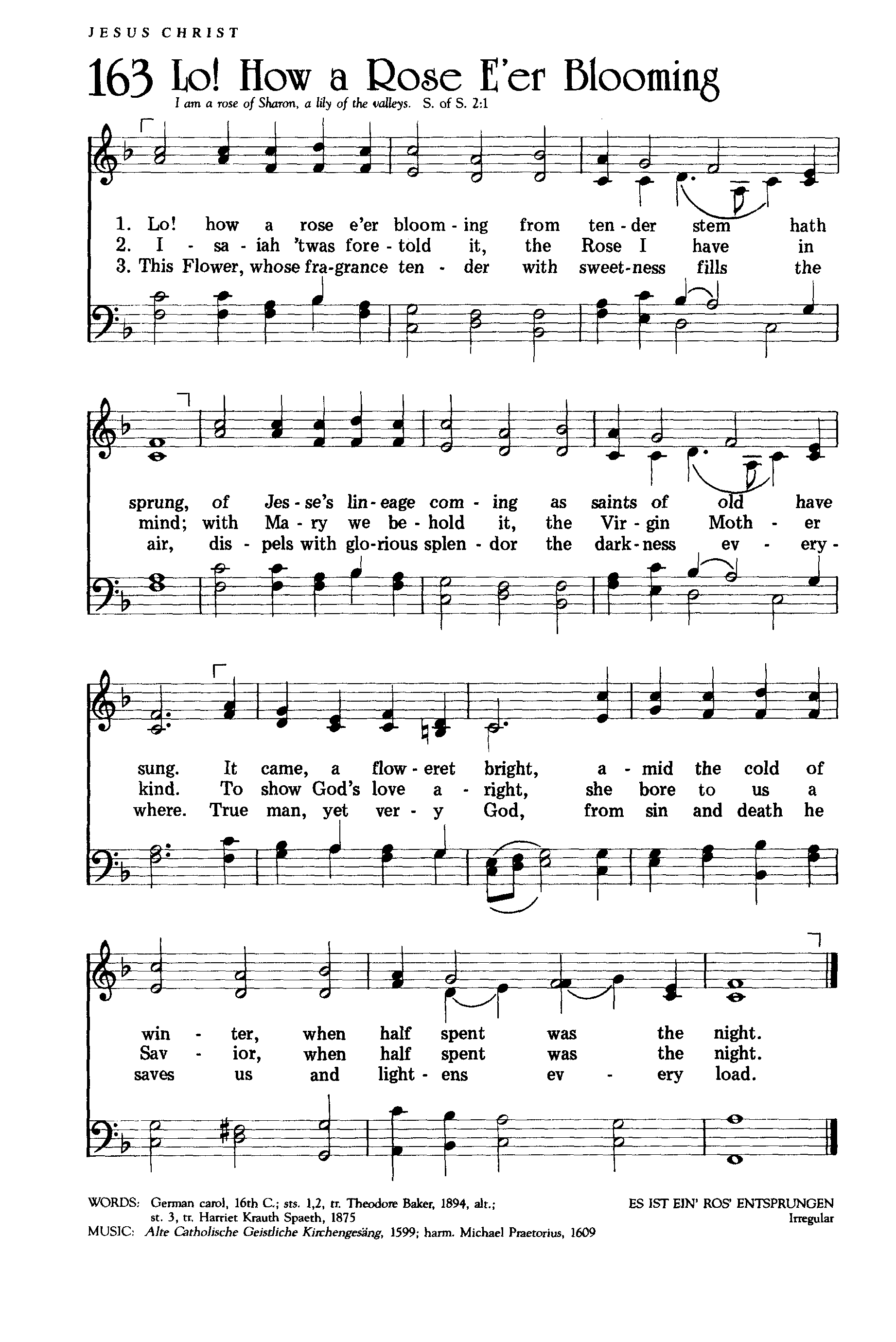
This wintry motif runs through the prophetic words—it speaks of darkness, drudgery, and a dungeon-like existence for God’s people. It implies blindness so powerful that the very idea of a rose e’er blooming seems distant and impossible. But ’twas Isaiah who foretold it. The prophet spoke of the flower whose tender fragrance would fill the air with sweetness, and of a shoot that comes up from the stem of Jesse (Isa. 11:1). Though the prophets spoke of impending doom and wintry nights for the nations, they were not ultimately chroniclers of doom; they were chroniclers of blooming flowers and splendorous hope for the nations.
When the Night Was Half-Spent
When half-spent was the night—or as Paul says, “in the fullness of time”—an embodied flower from the lineage of Jesse broke through the cold of winter and the cold hearts of first-century households. The cry of a little bright flower did not remain confined to the hearing of Mary and Joseph’s space, but the cries of the incarnate Son of God filled all of Judea and caused a holy ruckus in the household of Herod.
The Christ-child came from the stump of Jesse and surprised the world; the little babe, so few days old, came to rifle Satan’s fold, and no earthly rulers expected that—except those who trusted in the chronicles of the prophets. The birth of Jesus was not the glorious spectacle of kings in the ancient world, filled with pomp and pride, celebrating with debauchery and devilish behavior. No, the spectacle of the Christ-child comes as an unsuspecting baby, born through the miracle of a virgin mother kind.
His glory brings terror to tyrants and blessings to those with whom His favor rests. Christ comes as prophesied through the chronicling of prophets who foretold His arrival and would shatter the expectation-thermometer of the first century. His advent would bring the needed environment to end the tyranny of hopelessness. He would come to fulfill the chronicles of old and to put the carols of heaven on the lips of earthly singers.
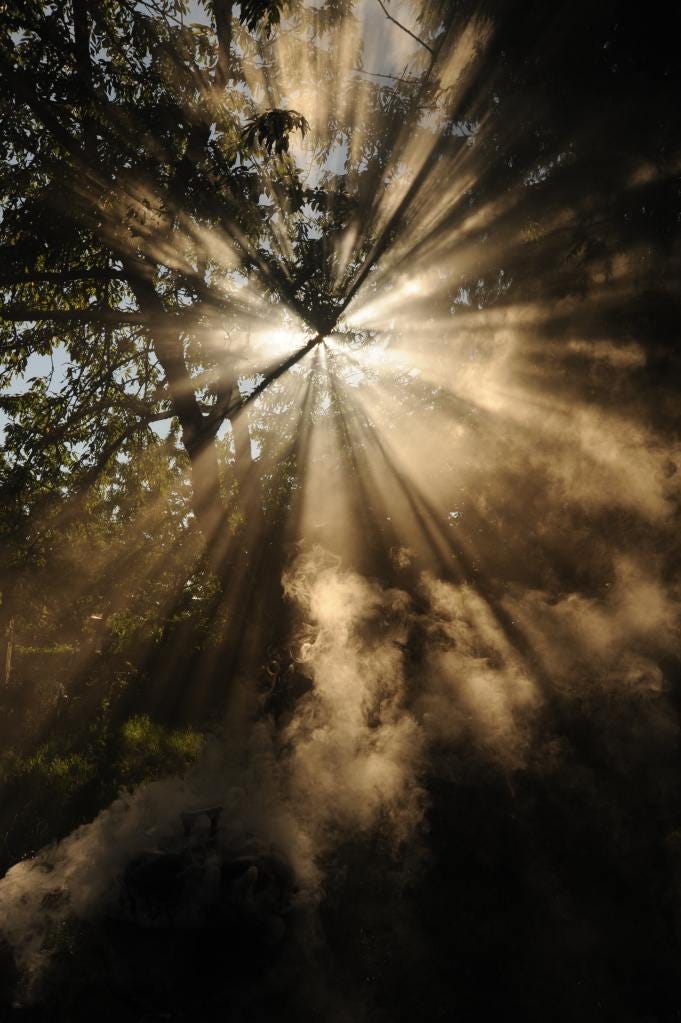
Jesus comes to offer us this Christmas Eve the glad tidings of great joy that save us from our sins and make our cold hearts alive again with the warmth of heaven. In Jesus, there is no perpetual winter; in Jesus, the love of the Father is shown aright; in Jesus, the load of our sins is lightened; in Jesus, we carol in hope, for darkness has been dispelled and the morning sun breaks when the night was half-spent.
Come to Christ! Come and worship the One who was chronicled by the prophets, true man and very God! The grass withers, the flowers fade, but the blossoming Word made flesh will stand forever!
Nuntium
Thank you all for reading these 25 Advent devotional pieces. It was a great delight to craft these and tailor them to a larger audience. Most of these are rooted in sermons and homilies delivered in the last 18 years.
May the Lord richly bless you this Christmastide!
After today, my posts will resume their regular Tuesday/Friday schedule, with Fridays being for paid subscribers. Stay tuned for some new material and series.
Today is the last day to take advantage of the 80% discount.
The Perpectivalist Podcast: New Episode
In this episode of The Perspectivalist, we examine a viral controversy that exposed a growing fracture within American Christianity. When Buddhist monks walked through central Louisiana promoting a “walk for peace,” many Christians applauded the gesture. Christ Fellowship pastor Jeff Mercer did not. In a brief, two-minute video, he stated a basic Christian claim: true peace comes not through mindfulness or meditation, but through Jesus Christ and His work on the cross.
The response was swift and severe. Accusations of intolerance followed, but most strikingly, the sharpest opposition came not from secular critics, but from fellow Christians. Within days, the United Methodist facility where Mercer’s church had met for nearly a decade revoked their access—explicitly citing his public statements.
In this conversation, Jeff Mercer joins us to discuss the video, the fallout, and what this episode reveals about contemporary Christianity’s discomfort with exclusivity, its accommodation to Eastern mysticism, and its fear of speaking plainly in the public square. We explore how ideas of peace have been redefined, why “vanilla” gospel claims now provoke outrage, and what it means to confess Christ openly in a culture—and church—that increasingly prefers silence over clarity.
This is a sobering but hopeful conversation about courage, faithfulness, and the cost of public Christianity in our time.
Thank you so much for these Advent devotions. They’ve truly increased and heightened my anticipation; the perfect start to my days. 🙌