

I. In the Garden of Eden, Yahweh presided over history’s first marriage. In the beginning (in the age of innocence), marriage was replete with responsibilities, and those responsibilities were joyfully fulfilled. Adam and Eve shared a mission and a vision. They would have continued to live happily ever after were it not for the rhetoric of deception that whispered to Eve that marriage can be simplified by tasting of the fruit of the tree. But as Adam and Eve learned: marriage is hard work. It cannot be simplified; it needs to be faithfully exercised.
II. Modern culture has adopted this same serpentine rhetoric. It has divorced the couple even before they are married by whispering to them that eating the fruit of deception will make everything easy. Our society says that just as Eve went on her individualistic journey in the garden, so too can two individuals pursue their own separate agendas and journeys. This is the dogma of the false gods.
III. After Genesis three, Adam and Eve learned that marriage is dangerous and that it takes a new family working together to ensure that Satan’s lies are no longer accepted. A godly marriage needs to reassert to the world that the fall did not destroy God’s purposes; that the fall was no surprise for God’s ultimate intentions for a husband and wife.
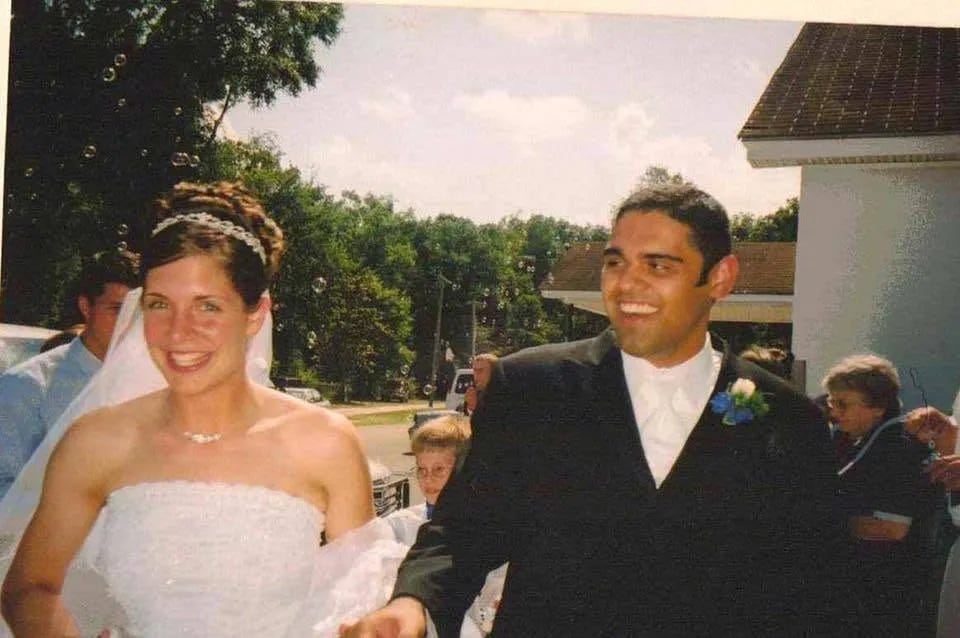
IV. Marriage is dangerous, but it is a danger you should joyfully embrace. Marriage is dangerous; it is as dangerous as the gospel of grace. Just as the gospel does, marriage accomplishes its purpose in the world. Marriage is dangerous, but it is a risk you must be willing to embrace for the life of the world. And by embracing this risk, your marriage is a part of the re-creating of the world after the image of the Triune God. It has cultural and cosmic implications. So as you embrace this holy calling, know that your marriage becomes a symbol of the gospel.
V. Marriage is fundamentally a metaphor. In Ephesians five, Paul says, “This is a mystery, but I speak concerning Christ and the Church.” It is not as if God created marriage and then afterward said: “You know, this would actually make a pretty good picture of the relationship I have with my people.” It is the other way around. God intended to unite Himself to His people, to join Himself to His people, to marry His people, and then He created human marriage between husbands and wives to show and reveal and to symbolize that to us. In Ephesians five, it is Christ’s marriage to the Church that is foundational. Our marriages are derivative; they are the copy. Marriage is a metaphor of Christ and the Church. It is a parable of the gospel. It is a replica; a model of Christ’s relationship to the Church. The first thing you must understand is that marriage is not really about marriage; it is about Christ and the Church, and if you do not understand this, you will never understand the glorious danger of marriage. The symbolism is not added on top of marriage; the symbolism is the root and foundation of marriage. The greatness of marriage is found in what it symbolizes.
VI. Marriage is dangerous because selfishness dies and selflessness becomes the living premise of this new family. In a wedding ceremony, death is a necessary part of this journey. And by dying, you symbolize to the world that marriage has responsibilities. You are not two individuals pursuing different agendas under the same roof; rather, you are two individuals who are dying to individualism and embracing a new identity. This marks the end of an old world and the embrace of a new one. But as you are united to one another, you are also declaring that the relationships and marital paradigms of the world are dead without Christ. What makes your death so glorious is that it is a death united to the crucified Lord. And it is precisely because of the necessity of your deaths that God proclaims the purpose of marriage to be one of feasting and resurrection.
VII. Marriage is the most joyous and celebratory event in the sight of man. It is the last bastion of formality in an age of informality, the last ritual in a culture barren of ritual.[1] The reason modern culture seeks to destroy it is because of its inescapable parallel to the marriage victory of Christ and His Bride in time and history. In a wedding ceremony, you are tasting what it means to be in the tomb of death and out of the tomb in resurrection. In marriage, you are declaring to the world that Jesus has fundamentally changed the sadness and sorrow of death to the ever-growing abundance of resurrection life.
VIII. Marriage is dangerous, but it is a danger worth embracing; a danger which the Son embraced when he came to dwell among us. So, when you begin to experience the natural difficulties of marriage, remember that Jesus has gone before us.
[1] Quoted from A Great Mystery by Peter Leithart, pg. 2.
Notations
C.S. Lewis would have been appalled by modern contemplations of heaven found in Christian bookstores. Some see John’s measure in the end of Revelation and assume that the author is interested in conveying an exact dimension. Liberals, on the other hand, despise and mock any version of heaven since the literal descriptions thereof have more in common with fairy tales than an actual place.
Though these perspectives may differ slightly, they all suffer from a similar problem: literalism. No Biblical thinker will deny the legitimacy of a real heaven, where real people will walk in real places. However, the danger in interpretation is that genres are often overlooked. Take, for example, the apocalyptic dimensions of the Revelation of Jesus Christ. Anyone familiar with such language will immediately assume that it is rarely, if ever, used literally.
According to Lewis, we cannot take these literally; they are symbolic. To assume that these descriptions were literal betrays a fundamental principle of hermeneutic. The early fathers understood this, and so did the Reformers. Lewis has a few words for those who attempt to make the text the unthinkable:
People who take these symbols literally might as well think that when Christ told us to be like doves, He meant that we were to lay eggs (Mere Christianity, 123).
Nuntium
I am headed to Virginia this Monday to speak at Poiema. My traveling has been about 40% lighter than 24-25. It’s been refreshing, but I confess it is always a pleasure to meet new folks, teach, and enjoy the festivities of different communities around the country.