

The Book of Lamentations is a retelling of the Genesis story. It is the story of a bride and groom reflecting on God’s character before and after the fall. In Lamentations, Jerusalem is being judged for her unfaithfulness. She is described as a lonely city, a widow, and a forsaken bride. She was a princess once, but now she has become a slave. Her people have gone into exile. This woman would have produced many children to bless the nations. Eve was to make lots and lots of children in the Garden to bless the nations, but now all that is lost.
Judgment from Genesis 3 has consumed them. Lamentations 1:8 says she has become naked like Eve in the Garden. Eden is in exile. And why is Eve so distressed? She is distressed because her priest deceived her. Lamentations says he sought food to revive their strength, a reference to Adam’s fall into the food-sin in Genesis 3. He ate from the wrong tree, took the offer from the wrong lord, and led his bride into rebellion.
Lamentations 1 and 2 are depressing movie that elaborates on misery and loneliness. Just when you think it’s over, there is more misery and loneliness. The Bible is not a TikTok novel tour. It is not a fantasy of bliss or a Precious Moments study Bible. It is raw. “Lord, Yahweh, for I am in distress; my stomach churns, and my heart is wrung within me.”
That is Lent.
Jeremiah was living in a negative world. Imagine trying to live your ordinary Christian life. You wake up in the morning, warm the water for your pour-over coffee, prepare your homeschool agenda, and then you go outside, and the chanting begins. Lamentations says, “All who pass along the way clap their hands at you.” They are not applauding your faithfulness. They hiss and wag their heads, they rail against you, they gnash their teeth seeking to swallow you, and they declare the end of these Christians draws near (Lam. 2:15).
Lent teaches us that the garden east of Eden is not friendly ground.
The Man Under the Rod
Then Lamentations changes perspectives from a defeated Eve to Adam. Chapter 3 begins: “I am a man who has seen affliction under the rod of his wrath.” Adam is the federal head. There is a lot of talk about masculinity in our day, which is good, but never forget that masculinity means federal headship. Whatever goes wrong in your garden falls on your head. Masculinity is the joyful acceptance of responsibility.
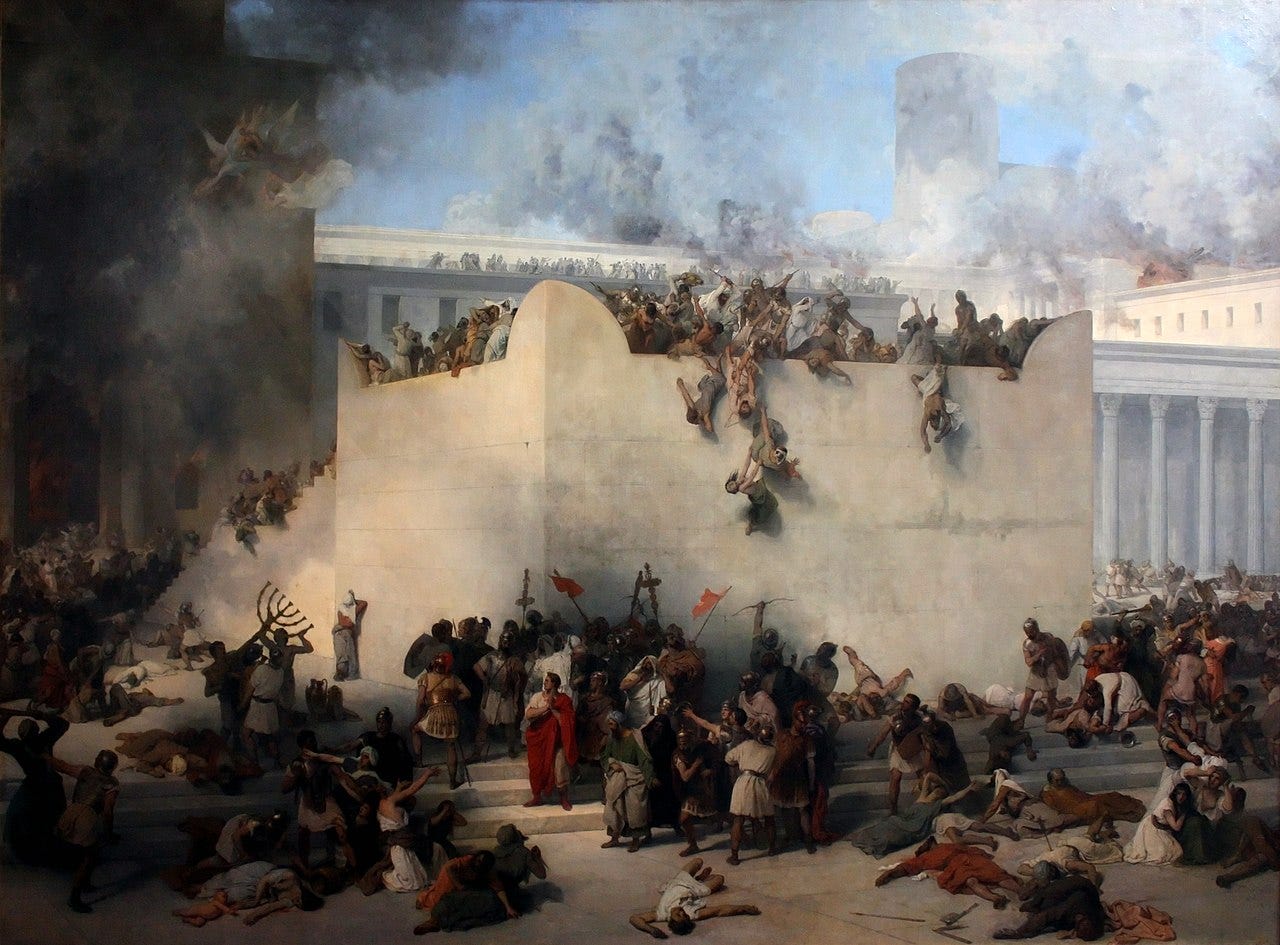
As you read Lamentations 3, Adam details how the city has been besieged. False priests have taken over Eden, and his sense of shame and guilt is high. Every covenant is turned upside down. I am surrounded by darkness. I cannot escape. Lions wait to eat me. I am the laughingstock of the peoples. I am bereft of peace. My hope has perished.
It is all Lent.
“Remember my affliction and my wanderings, the wormwood and the gall.” The Church even sings it:
Sinners, whose love can ne’er forget
The wormwood and the gall,
Go, spread your trophies at His feet
And crown Him Lord of all.
Lamentations is a Psalmist lament. The Christian faith is the only true dialogue religion. It allows you to compose verses of complaint to the Creator of the universe, and instead of crushing you, He invites more honesty and conversation. Imagine a God who allows lament and does not destroy the one who prays it, but instead invites you to closer communion?!
But if all you do is compose laments, you will remain trapped in ashes. Lent is not permanent despair. It is disciplined grief moving toward restoration. So compose psalms of lament, but do not end them with a fallen garden. End them with hope for a restored garden.
And this man, echoing Adam and then the true Man Jesus, does exactly that. Life has been difficult. Thorns pierce his feet. Yet he says, “My soul continually remembers it and therefore I have hope.”
Morning Mercies and the Coming Easter
Sometimes you must look beyond your present state of life to God’s promises. Sometimes you wake up, breathe the cool morning air, and say, I will trust God even though storms are coming and the ground is still cursed.
That is the context for the most famous words in Lamentations:
It is of the Lord’s mercies that we are not consumed, because His compassions fail not. They are new every morning. Great is Thy faithfulness.
Every day, even if yesterday was awful, is a new opportunity to experience Easter. God renews mercy whether you feel ready for it or not.
I remember the old hymn:
Every day with Jesus
Is sweeter than the day before.
It may not always feel sweeter, but there is always hope for sweeter communion with Christ. Lent trains our eyes to see it.
If your eyes can see by faith an empty tomb, then your arms will open to receive those mercies. If you cannot look beyond Genesis 3, the mercies will lie before you like unused manna. It will fall from heaven. Others will testify to its goodness. Yet you may choose perpetual Lent over the hope of the resurrection.
So choose differently.
Choose to eat the manna every morning. Choose to remember God’s goodness. Choose the mercies of an empty tomb located in a new garden with a new Man, the man Christ Jesus.
Because Lent is not the destination.
It is the road that teaches us how to recognize Easter when it arrives.
Notations
This conversation moves beyond investing strategy and into theology, ethics, and anthropology. Money, they argue, is not neutral. It shapes trust, power, authority, and social structures. Throughout Scripture, honest scales, just weights, and protection of the vulnerable reveal that how a society structures its money affects how it treats its people.
Jordan shares how his time ministering to Venezuelan immigrants in Uruguay exposed him to the devastating effects of currency collapse and hyperinflation. Churches, families, and businesses saw years of savings wiped out by
monetary debasement. That experience led him to study the ethics of money production and eventually Bitcoin.
The discussion traces the history of money—from gold and silver to fiat currency—and considers Bitcoin as a digital form of scarcity designed to resist inflation and centralized control. Gold and silver historically functioned as stable money because of their durability, scarcity, and trustworthiness. Fiat currency, by contrast, can be expanded at will, often benefiting governments and financial elites at the expense of ordinary people.
Bitcoin attempts to combine the scarcity of precious metals with the portability and digital nature of modern currency. With a fixed supply of 21 million coins, it operates outside direct governmental control, raising important questions for Christians about limits, authority, stewardship, and economic justice.
The episode also addresses Bitcoin’s volatility. Jordan explains that price swings are normal in emerging technologies and compares Bitcoin’s market cycles to seasons in agriculture or stages of human maturity. For long-term holders, volatility is not necessarily a sign of failure but part of a developing monetary network.
The episode concludes with a brief discussion of Jordan’s children’s book, The Orange Umbrella—a story that introduces the themes behind Bitcoin without ever mentioning it directly.
This is not merely a conversation about cryptocurrency. It is a theological reflection on money, trust, power, and the kind of economic systems that best reflect biblical principles.
This Substack is reader-supported. To receive new posts and support my work, consider becoming a free or paid subscriber.
This.
“But if all you do is compose laments, you will remain trapped in ashes. Lent is not permanent despair. It is disciplined grief moving toward restoration. So compose psalms of lament, but do not end them with a fallen garden. End them with hope for a restored garden.”