

The Tyranny of Anxiety
There are many challenging imperatives in the Bible. I would place anxiety on the top-five list. Scripture repeatedly calls us away from anxious living, yet we know how persistent anxiety can be. Yes, God provides strength and wisdom to fight anxiety. The reality, however, is that we often live with its presence daily. After all, it is easy to be anxious even about thinking of an anxiety-free life. Children, family, relationships, finances, and education all add to the notorious list.
The apostle Paul offers a command that is as beautiful as it is difficult:
“Do not be anxious about anything, but in every situation, by prayer and petition, with thanksgiving, present your requests to God.” (Philippians 4:6)
This is not a light suggestion but a deep invitation into a different way of living. Marva Dawn often observed that anxiety easily becomes a kind of spiritual captivity. When our lives are governed by worry, our imaginations are dominated by threats rather than by God’s promises. Anxiety narrows the horizon of our lives until our troubles seem larger than God’s faithfulness.
Lent reminds us that our anxieties must not define us. Christ does.
Concern Is Not the Same as Anxiety
It is essential to add that anxiety in biblical categories is not the same thing as concern. The Scriptures do not call us to a careless or detached life. Concern for the well-being of a loved one traveling or for a friend's health is part of faithful living.
The anxiety the Bible addresses is the all-consuming and imprisoning sensation of driving your life through the lens of your troubles and cares.
Being concerned with big or small things is not the problem. The problem stems from allowing these concerns to govern your day-to-day life. When worry becomes the interpretive grid for every circumstance, our attention shifts away from God’s providence. When we imagine that the world rests on our shoulders, our hearts collapse under the weight. Christian faith, however, insists that the world rests in God’s hands.
In fact, according to Paul, anxiety stems from a lack of gratitude and proper devotion to God. Notice that Paul places thanksgiving at the center of the antidote to anxiety. It is rare to find a grateful person driven by anxiety. Gratitude loosens the grip of worry because it trains the heart to recognize God’s ongoing care.
Prayer, Gratitude, and the Way of the Cross
Anxious people often draw others into their anxiety. We sometimes spread our worries in ways that burden those around us. It is worth asking: Are you that way? Do you use anxiety to manipulate others? Or does your anxiety lead you toward petition, piety, and praise to God?
Paul’s counsel is remarkably simple: bring everything to God in prayer. Every fear, every uncertainty, every concern is meant to become a petition offered to the Father.
Prayer is the practice of placing our anxieties into the hands of the One who actually governs the world. Prayer is not merely therapeutic relief; it is an act of surrender. It reminds us that our lives are not ultimately sustained by our vigilance but by God’s faithfulness.
Our Lenten journey drives us to the crucified Jesus. On the night of his suffering, he offered his petitions to his Father in heaven. In Gethsemane, he poured out his deepest longings and anguish before the Father who does all things well. Jesus did not suppress his distress. He entrusted it.
Too often, we are driven by our anxieties because we are not driven by our devotion to the Lord of the Cross. Lent redirects our attention. It leads us away from the tyranny of worry and toward the peace that comes from surrendering our lives to the crucified and risen Christ.
Prayer becomes the path from anxiety to trust.
Prayer
Gracious and Holy Father, in love you created us; you made us reflect your glory and expect your future glory to be manifested in our lives. Forgive us when we blind ourselves to your blessings by anxieties that darken our minds. We wish to see clearly your future, and so we pray: take away our anxious hearts and replace them with comforted hearts who know and trust in your tender care through Jesus Christ our Lord, amen.
Notations
A dear friend reminded me recently how easy it is to trust in your own strength to carry on your labors and how difficult it is to relinquish that strength to God’s mighty hands. This came clearer in a straightforward line from my old professor, John Frame, when he writes: “God made us and therefore he owns us; we may not quarrel with him” (23, IST). Doing things by your own strength is a form of quarreling with God’s ownership.
Peter’s betrayal in Mark 14 happens by a fire. His restoration happens around a fire (John 21). Peter is tested by fire and then refined by fire.
Commonplace from current reading: “We make men without chests and expect of them virtue and enterprise.” —C.S. Lewis, The Abolition of Man
D.C. Memories
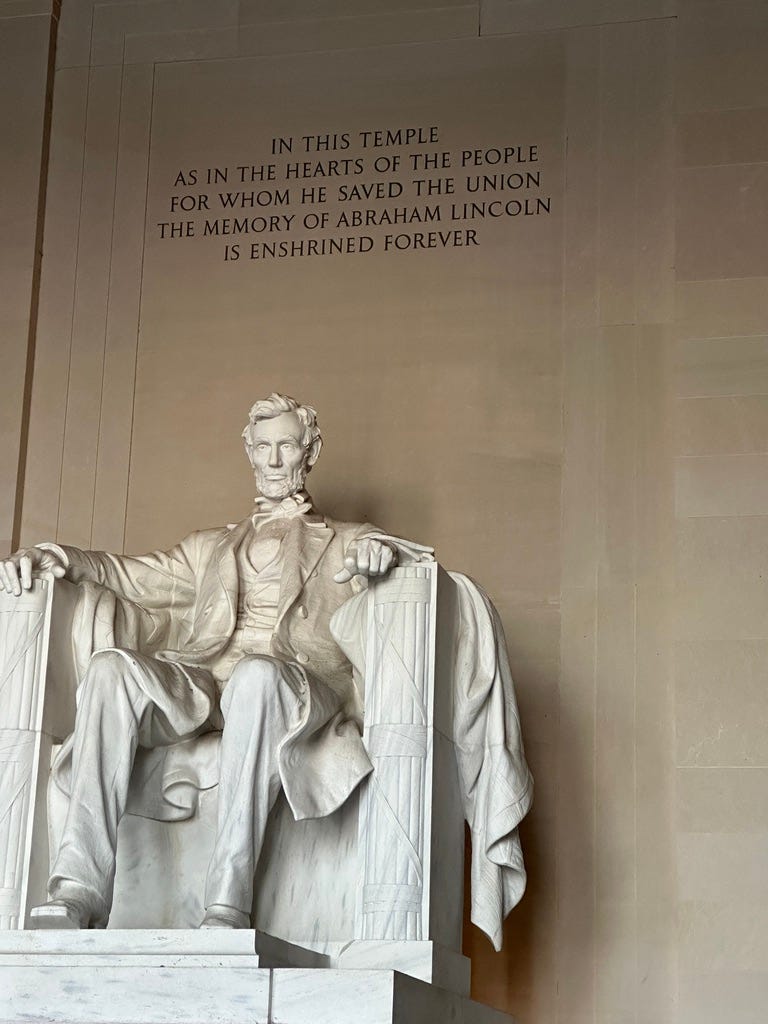
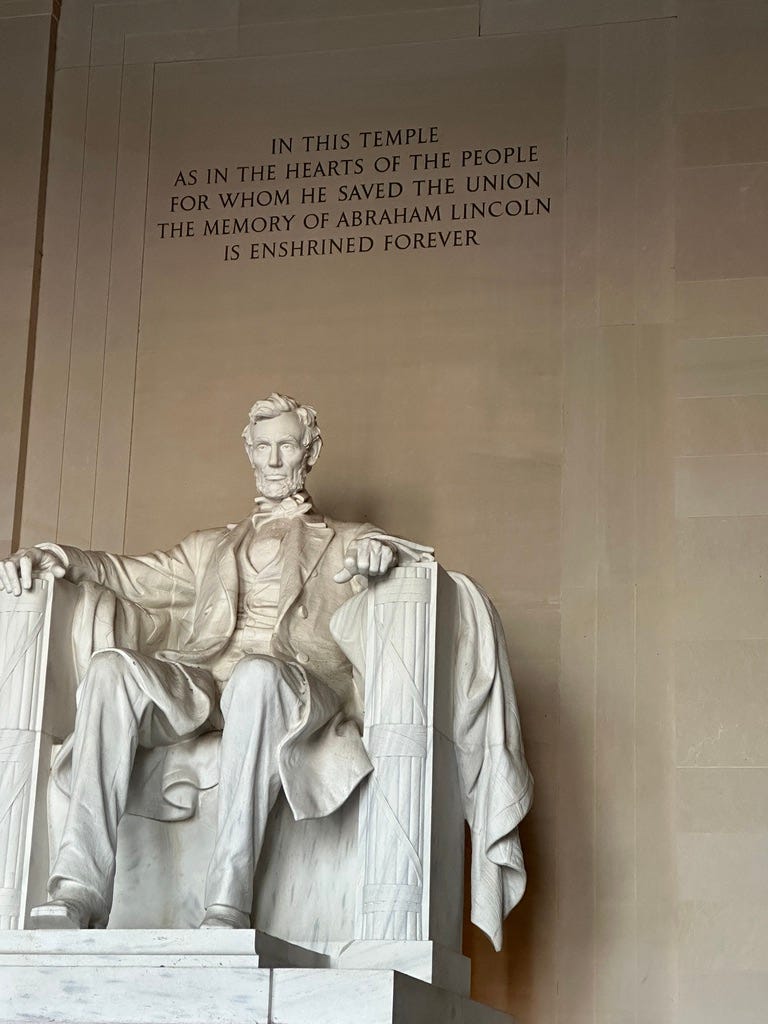
The Lincoln Memorial in Washington, D.C., dedicated in 1922, stands as one of the most powerful monuments in the United States. Designed by architect Henry Bacon and featuring the monumental seated statue of Abraham Lincoln sculpted by Daniel Chester French, the memorial resembles a Greek temple, symbolizing the classical ideals of democracy and civic virtue. 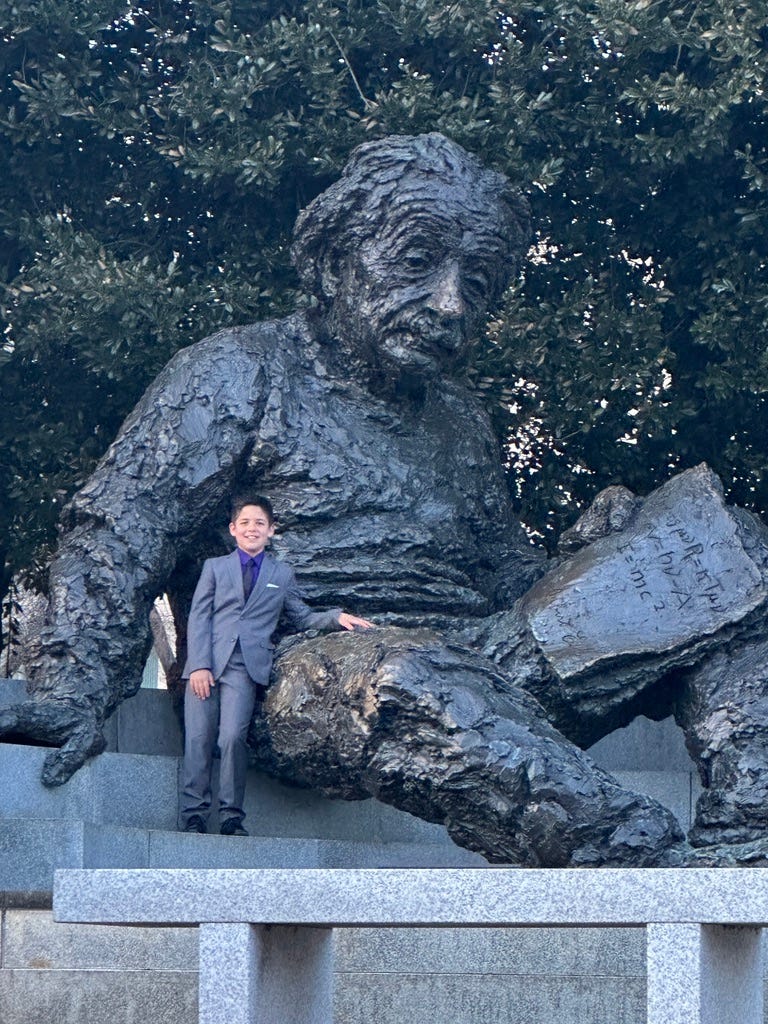
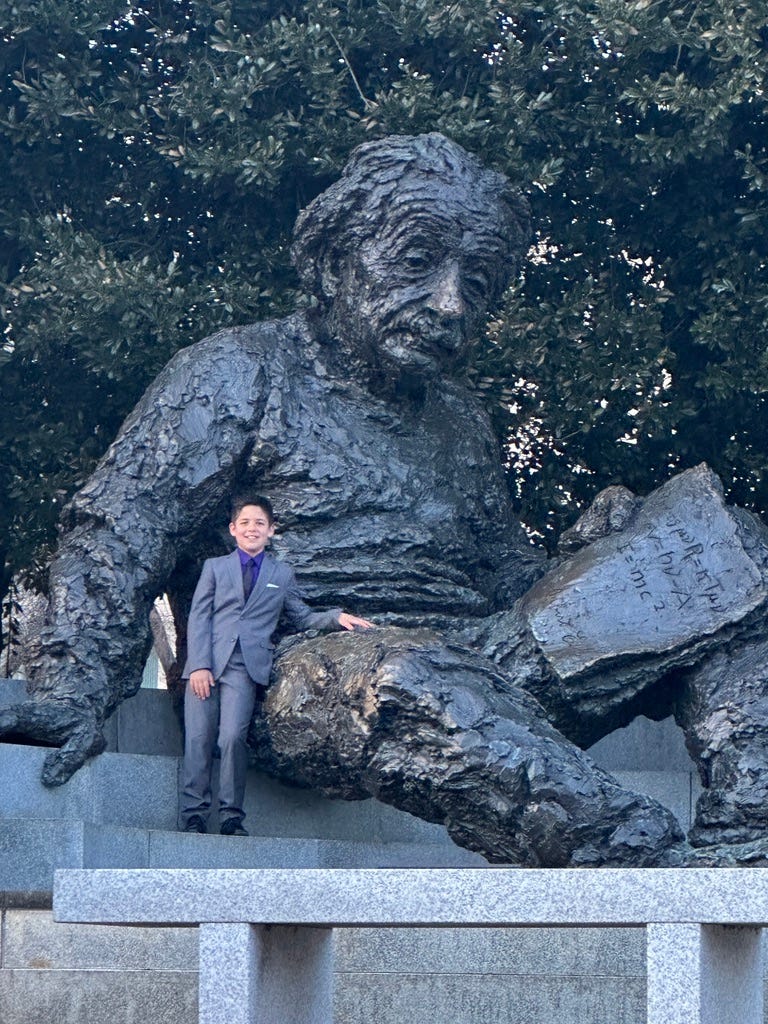
I had not seen this before, but it was an exciting new addition right across from the Lincoln Memorial. The Albert Einstein Memorial is located on the grounds of the National Academy of Sciences in Washington, D.C., just a short walk from the Lincoln Memorial. Dedicated in 1979 to commemorate the centennial of Einstein’s birth, the monument was designed by sculptor Robert Berks.

If you would, tell Paul I said hi.