Judgment and Promise
The book of Joel is a book about judgment and promise. It is like many of the other minor prophets. If you were to sit down and read the Twelve Minor Prophets, you would see a series of repetitive themes. Certain sins appear again and again, defining Israel and her present condition.
What is unique about Joel is that he does not lay out the particular sin he is addressing when he promises judgment. Joel assumes you are already in conversation with the other prophetic books. He presupposes that you know your Bible quite well.
Joel is so skilled in the prophets that his book reads like a tapestry of quotations from Isaiah, Jeremiah, Zephaniah, Ezekiel, and others. Joel appears as a pastoral figure seeking the well-being of the people. To communicate this, he bathes his letter in judgment and promise language. These two themes fall under a single category that Joel calls the Day of the Lord.
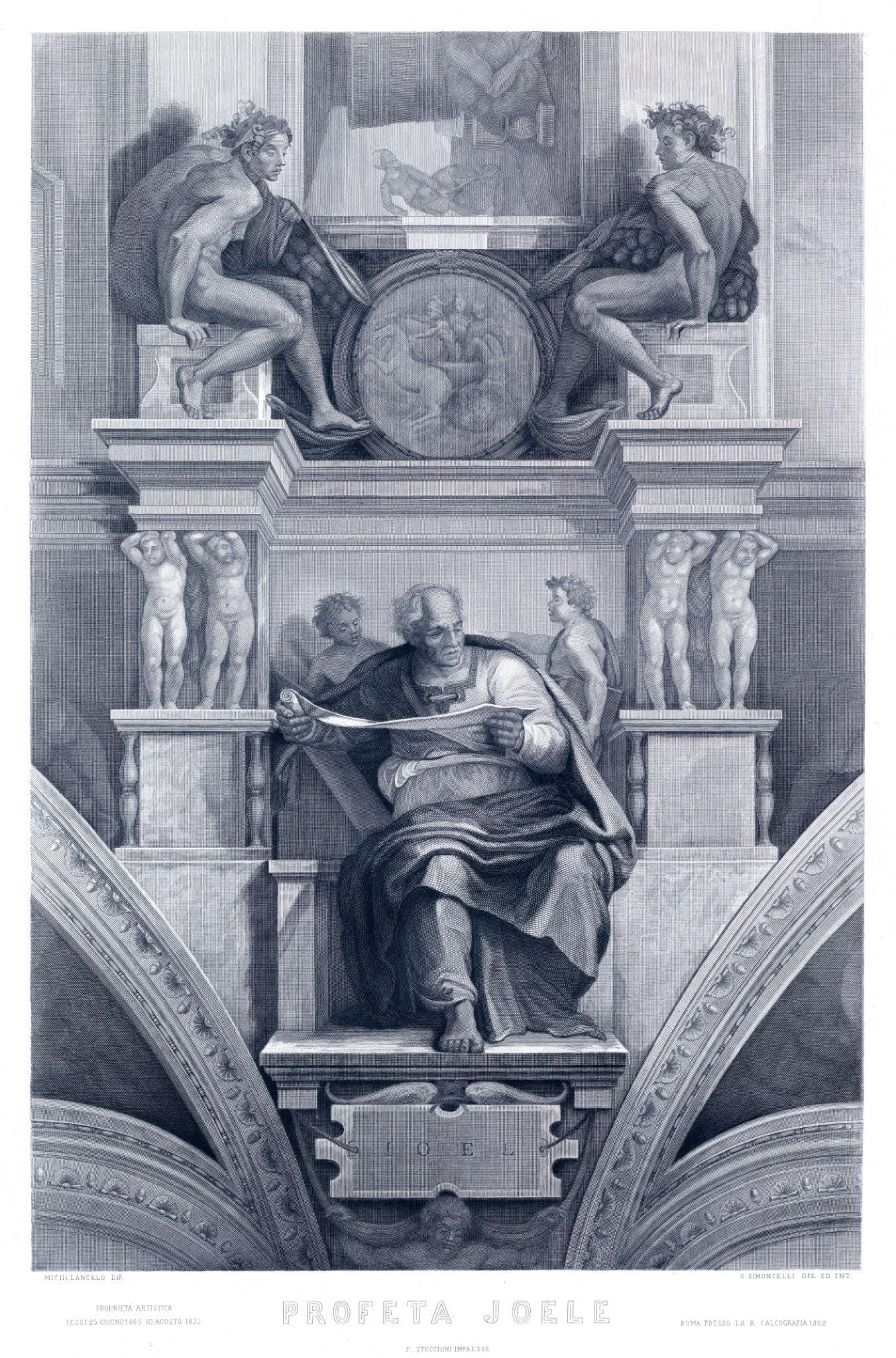
For us, the question becomes simple and searching. On which side of that day do we want to fall? There is a good Day of the Lord, and there is a bad day. What kind of day do you want to have?
Joel gives the answer plainly:
“Yet even now,” declares the LORD,
“return to me with all your heart,
with fasting, with weeping, and with mourning;
and rend your hearts and not your garments.”Return to the LORD your God,
for he is gracious and merciful,
slow to anger, and abounding in steadfast love,
and he relents over disaster.
Which side of the bed do you want to wake up in?
On one side, the Day of the Lord reveals a God who is slow to anger and abounding in steadfast love. On the other side, the Day of the Lord feels like Portland weather. It is dreary, dark, uncertain, and without any prospect of sunshine.
Returning with All Your Heart
The linchpin for determining what kind of day you will have, or even what kind of future you desire, is the character of God. We change like petals on a daisy. Some days we love him, and some days we love him not. But God is a God abounding in steadfast love. He does not change. There is no shadow of turning in him. Our trust rests in God’s unchanging promises.
Joel calls us to return to God with our hearts. Do not look inside yourself. Do not look to the signs in the skies. Do not look to gurus. Look to God. Go to him.
In Joel, repentance is the proper entrance into Lent. Repentance means turning to someone. Joel calls us to enter Lent with all our hearts.
How do we do that? Joel says with fasting, weeping, and mourning.
However we interpret those words, we know this much. Fasting, weeping, and mourning are not the habits of unrepentant people. If you fast, your body feels its need. If you weep, your composure changes. If you mourn, your disposition shifts. These are action words. Repentance always involves movement.
Repentance turns night into day, Sodom into Jerusalem, valleys into mountains. During Lent, we must walk like we mean it.
Lent is not business as usual. It is business unusual, a season when we intentionally slow down to face our sins and the mercy of God. Confession belongs to every season of life, but Lent gives the church forty days to dwell on sin, confession, absolution, and reconciliation as a journey that leads us to the cross of Jesus.
This is why Lent matters. It teaches us to walk on the Day of the Lord side of the aisle, trusting a God who is slow to anger.
From Lent to Easter
Joel ends his letter with promises of restoration. The language echoes the promises of other prophets.
“Then the LORD became jealous for his land
and had pity on his people.
The LORD answered and said to his people,
‘Behold, I am sending to you
grain, wine, and oil,
and you will be satisfied;
and I will no more make you
a reproach among the nations.’”
Look carefully at the promise for those who walk humbly during Lent. Your land and garden will be restored. God sends grain, wine, and oil.
Bread is good. Wine is great. Oil is liquid gold. Oil anoints. Oil fattens. Oil adds flavor. It is the one, two, three promise of glory that God gives to his people.
Joel is pointing us forward. Joel is pointing us to Easter Sunday.
On Easter Sunday, our fasting becomes feasting. Our weeping becomes laughter. Our mourning becomes celebration. All the diligence we practice during Lent will make sense. More than that, it will be good for our souls and bodies. It will deepen our joy and sharpen our gratitude.
Do not let your sins coat your tongues and stain your lips. Confess them in every season. But especially during Lent, come and tell your God that you want to stand on the right side of the Day of the Lord.
More Jamestown
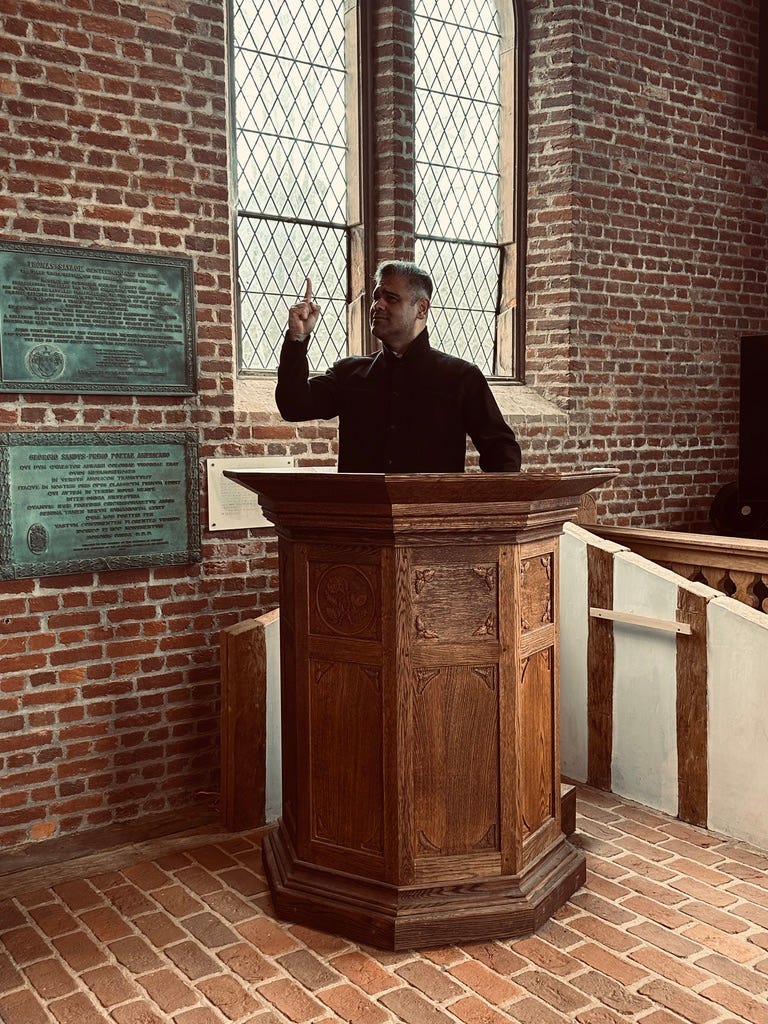
In my recent visit to Jamestown, I declared the first Protestant Church in America a CREC body! My wife and son witnessed the occasion! Seriously, what a stunning pulpit, and what a magically historical place.