Lent is a season that forces us to ask long-term questions. It slows us down and reminds us that the Christian life is not built on momentary emotions or short-term pleasures. It is built slowly and patiently over time. Proverbs 10:14–16 gives us a window into that slow process. Solomon speaks about storing, accumulating, and building—about the kind of legacy a life produces.
“The wise lay up knowledge, but the mouth of a fool brings ruin near.
A rich man’s wealth is his strong city; the poverty of the poor is their ruin.
The wage of the righteous leads to life, the gain of the wicked to sin.”
These verses remind us that life is always moving toward a harvest. What we accumulate today will shape the future tomorrow.
Building a Legacy of Wisdom
One of the recurring themes throughout Proverbs is the idea of building up and accumulating. Wisdom is not something that appears overnight. It is gathered slowly, like grain stored in a barn.
There was a headline that caught my attention some time ago. The famous actor Jackie Chan announced that his 400-million-dollar fortune would not be left to his son. Instead, it would be given to charity. His son, he said, would need to earn his own living. When I read that story, I immediately thought of Proverbs 13, which says, “A good man leaves an inheritance to his children’s children.”
But Proverbs 10 reminds us that there is another inheritance even more important than money. “The wise lay up knowledge.” Literally, the wise store up or build up knowledge.
Wisdom, like money, is a long-term project. It requires patience, discipline, and attention. We gather wisdom through listening and learning, through reading and writing, through conversation and forgiveness. We gain wisdom by asking questions of those who have gone before us and by avoiding the company of fools.
And like wealth, wisdom is not accumulated merely for ourselves. It is built up so that others may benefit. The wise man stores knowledge not only for his own life but so that he may bless those who come after him. Wisdom becomes a kind of succession plan. It is gathered in order to be given away.
Wealth, Poverty, and Righteous Labor
Verses 15 and 16 apply this principle of accumulation to wealth.
“A rich man’s wealth is his strong city; the poverty of the poor is their ruin. The wage of the righteous leads to life, the gain of the wicked to sin.”
The Bible is always very careful when speaking about money. On one hand, Scripture repeatedly warns about the dangers of riches. Wealth can easily become an idol. It can create a false sense of security and lead people to trust in possessions rather than in God.
But the Bible is equally clear that wealth itself is not evil. Proverbs treats wealth with balance. As one commentator notes, about half of Solomon’s proverbs about riches encourage the young to value wealth, while the other half warn them not to trust it.
Verse 16 clarifies the difference: wealth must be acquired righteously. “The wage of the righteous leads to life.” Wealth gained through honest labor and faithful stewardship can become a blessing to others. It can strengthen families, support churches, care for the poor, and build communities.
At the same time, Proverbs rejects the romantic idea that poverty itself is virtuous. There is no spiritual merit in embracing poverty for its own sake. Solomon says plainly that poverty can lead to ruin. A person who lives constantly on the edge of survival often faces daily anxiety about basic needs.
The issue, therefore, is not wealth or poverty in themselves. The issue is righteousness. The righteous man remains faithful whether he has much or little. The wicked man, however, uses whatever he gains to pursue sin.
The Purpose of Accumulation
Productivity is not evil. Work, investment, and growth are all part of the dominion mandate God gave to humanity in the beginning. The real question is this: what is the purpose of your productivity?
Why are you accumulating wisdom? Why are you storing wealth?
Twenty years from now, when someone speaks your name, what will they remember? Will they remember words of wisdom and encouragement? Will your children remember a life that built something stable for them to stand upon?
Proverbs reminds us that storing up wisdom builds a foundation for the future.
The same is true for the Church. The Church must never be seen as a community for the rich or for the poor alone. The Church is a different kind of society altogether. In Christ, the walls of economic and social division are broken down.
In the household of God, the rich bless the poor, and the poor bless the rich. The Spirit distributes gifts without regard to class or status. The Church becomes a living picture of charity, wisdom, generosity, and faithful stewardship.
And through that life together, Jesus Christ continues to purify and glorify His bride.
Lent calls us to examine what we are storing up. Are we accumulating wisdom that gives life? Or are we gathering things that will ultimately lead to ruin?
The wise build slowly, faithfully, and for the sake of others.
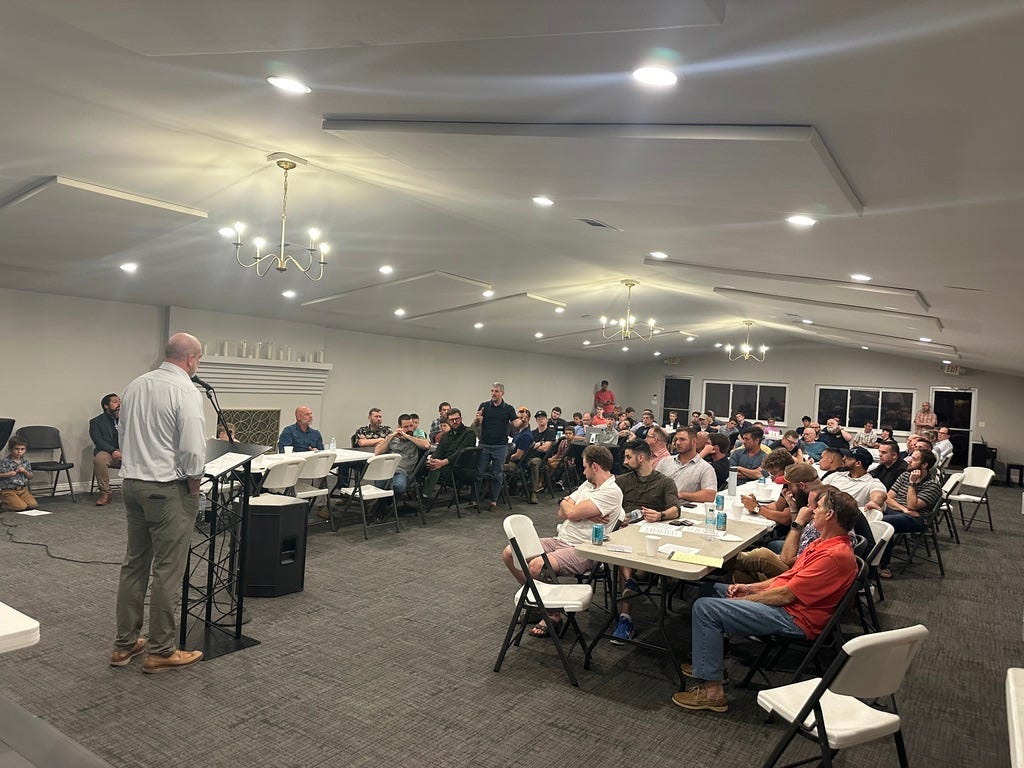
NSA President, Dr. Ben Merkle, in Pensacola, Fl
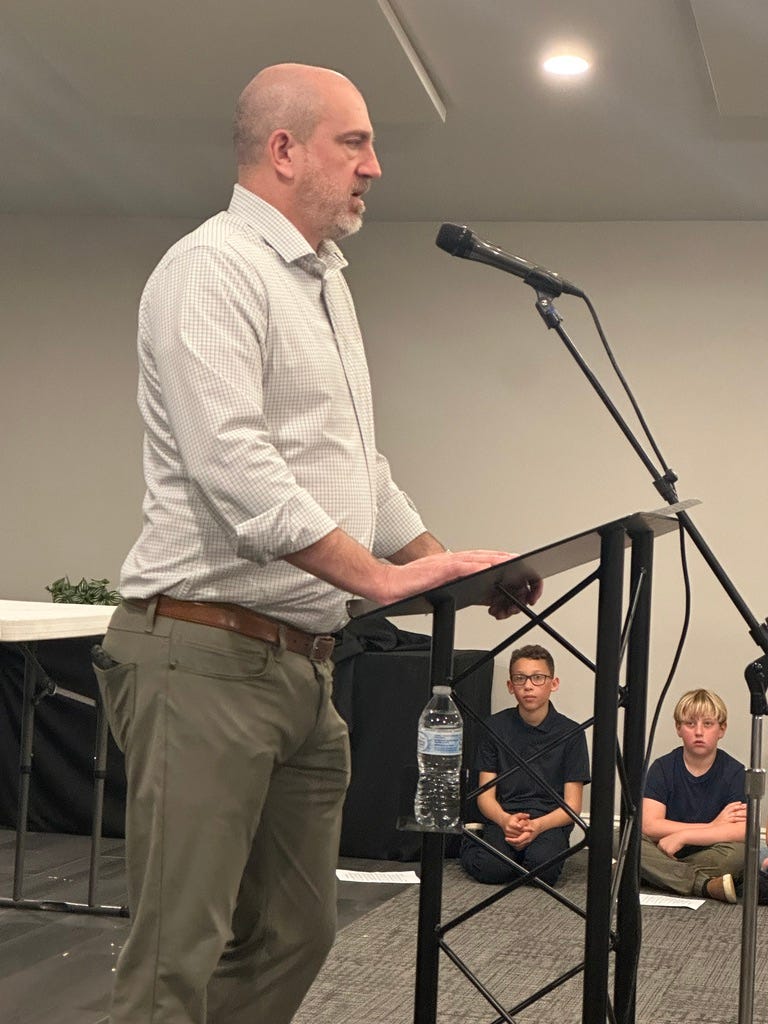
Around 80 men and sons gathered to hear Dr. Ben Merkle speak at our Men’s Forum at Providence Church.
Dr. Merkle’s talk on “Man and Labor” offered a robust biblical theology of work. He argued that work is not a curse to be escaped, but a gift from God to be embraced. Long before the fall, Adam was commanded to exercise dominion over the earth. This means that labor belongs to man’s original calling. Work may now be frustrated by sin and thorns, but it remains a holy vocation. Men were made to imitate their Father, and one of the first things humanity learned about God is that He works.
Dr. Merkle challenged the modern assumption that work is merely a necessary evil. In our age, many seek convenience, comfort, and technological shortcuts, yet still feel drawn to effort, discipline, and productivity. That contradiction reveals something important: man does not simply need the fruit of work, but the work itself. A man without labor becomes restless and miserable because he is neglecting part of what it means to bear God’s image.
He also connected Genesis 1 to the Great Commission, arguing that Christian labor is one way God’s kingdom is extended in the world. Faithful work, even in obscure callings, is an act of dominion and obedience. Whether one is stocking shelves, mowing lawns, managing numbers, or teaching students, honest labor done unto Christ is glorious.
Finally, he warned men against vocational resentment. Work is often frustrating, especially for young men whose ambitions exceed their opportunities. But bitterness over a career can slowly deform a man’s soul. The antidote is to see labor as a divine calling, to embrace it joyfully, and to pursue it with discipline, gratitude, and hope.