

Some years ago, I was speaking at a conference in Oregon on the book of Jonah. I had made the case that evil is constantly swallowing people in the Bible. The serpent swallows Adam and Eve in the Garden. Fire devours traitors in Israel. Swarms of flies devour. The sword devours. The earth devours. The devil prowls, seeking whom he may devour. In Jonah, a sea creature swallows Jonah. Jonah prays, and then the creature vomits him onto dry land, where he begins his ministry to the Ninevites.
After the talk, a little girl came up to me and said, “Pastor Brito, if evil swallows people, does good swallow people too?” I asked what she meant. She clarified: “Does God swallow us?”
I gave her a tentative yes, but now I am convinced I should have given her a definitive yes.
Lent helps us see why that answer is not strange but glorious. During this season, the Church trains us to think in terms of death and life, burial and rising. To be a Christian is to be swallowed—not by chaos, not by evil, but by the life of God. Human beings are created as living sacrifices, a sweet-smelling aroma to God. Just as the sacrifices of the Old Testament were acceptable and pleasing, so we are drawn into God’s own life daily. To be in Christ is to be in God.
Confession, therefore, is not self-loathing. It is being swallowed up in death and made alive in Christ Jesus. God consumes our pride, our sin, our self-sufficiency, and then sends us out again onto dry land, as he did Jonah, to live faithfully before our communities and churches. Lent is not about shrinking into spiritual minimalism; it is about being swallowed by grace so that we might be sent back renewed.
The Word Tested in the Water
We see this pattern in Luke 5. There is nothing outwardly extraordinary about the scene. Jesus continues his itinerant ministry. The multitude presses about him to hear the Word of God, and he stands by the Lake of Gennesaret. The details matter. If you have swallowed the Word, or to borrow Eugene Peterson’s phrase, if you have “eaten this book,” you know biblical geography is never filler.
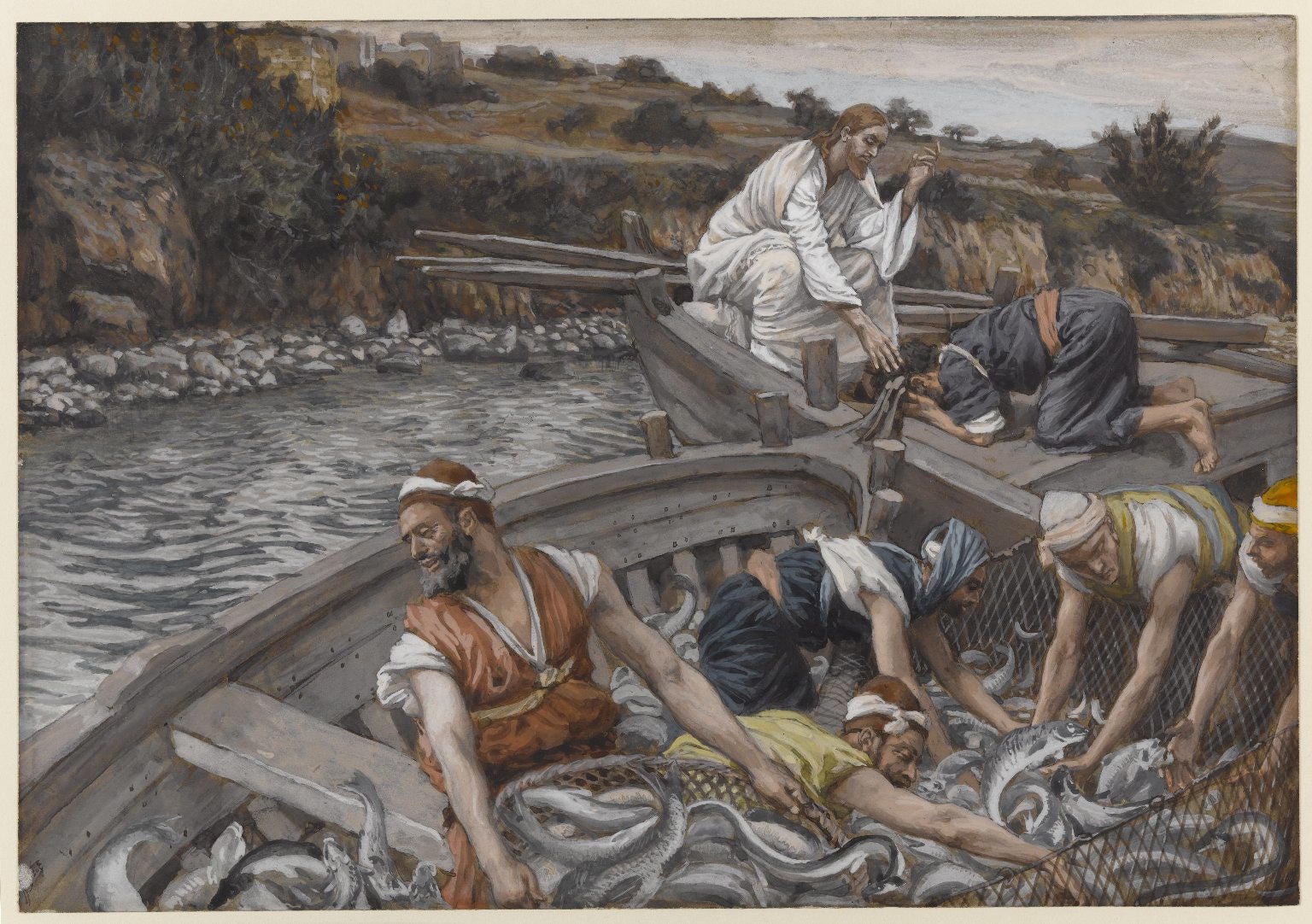
Gennesaret comes from the Hebrew Kinneret, meaning harp or lyre. Jesus positions himself intentionally. He gets into a boat and begins to preach. There is something musical here—harp and Word, water and proclamation. We often say Word and Sacrament. We should confidently say Word and Song. Jesus sings his sermon to a fishing community.
Then the Word is tested in the water.
“Launch out into the deep and let down your nets for a catch.”
Simon responds honestly: “Master, we have toiled all night and caught nothing; nevertheless, at Your word I will let down the net.”
Lent is precisely this moment. The Word confronts us after long nights of empty nets. “Go and serve your neighbor.” “Go and confess your sins.” “Go and sacrifice for your wife.” We respond as Peter did: “Lord, I’ve tried. I’ve toiled. I’ve failed.” Often our striving has not been bathed in prayer or confession. We have attempted obedience in our own strength. As the hymn says, “Did we in our own strength confide, our striving would be losing.”
But Jesus does not ask for ingenuity. He asks for trust. “At Your word I will.”
And when they did this, they caught a great number of fish, and their nets began to break.
The season of Lent exposes whether we will believe the Word despite our fatigue.
Swallowed Pride, Sent in Worship
The pattern of Scripture is that trust in the Word leads to worship.
The boats fill. They begin to sink. Simon Peter falls down at Jesus’ knees and says, “Depart from me, for I am a sinful man, O Lord!” The miracle is not merely about fish. It is about revelation. When Peter obeys the Word, he sees himself clearly. He is undone. He is swallowed—not by water, not by fear—but by holiness.
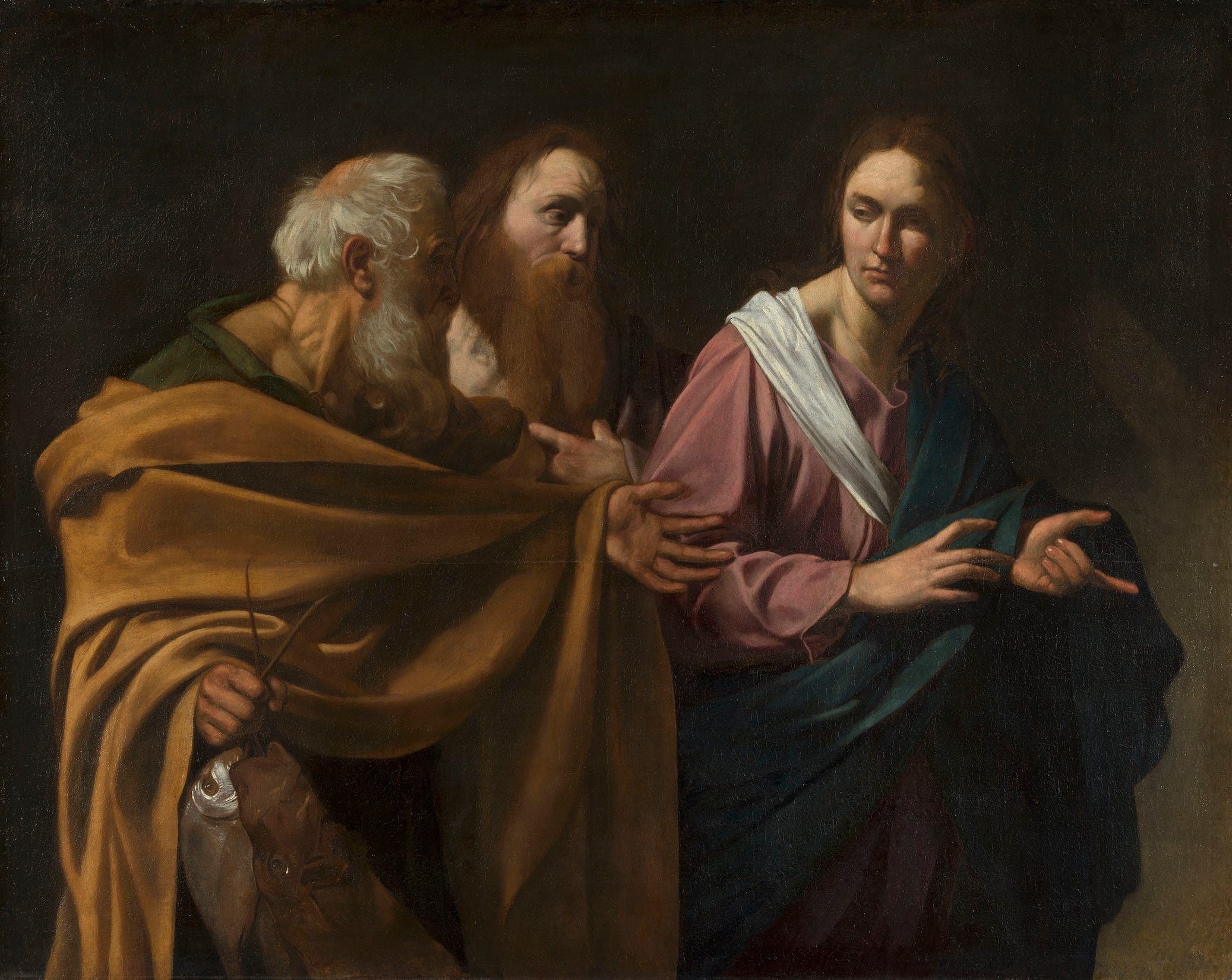
This is the Lenten journey. Christians move according to the Word, and when we do, we discover how self-oriented we have been. We realize who is Lord over the fish of the sea and over the depths of our hearts. We realize that God must swallow our pride before he can send us back into the land renewed and whole.
To be a living sacrifice means allowing God to consume what must die in us. He swallows our pride, our illusions of competence, our fig leaves of self-sufficiency. And then he sends us back—into homes, churches, neighborhoods—not diminished but made fragrant. A pleasing aroma. Acceptable. Alive.
The little girl’s question still lingers. Does God swallow us?
Yes. He swallows our sin in confession. He swallows our pride in obedience. He swallows our despair in worship. And having swallowed what would destroy us, he sends us back onto dry land with nets full and hearts humbled.
That is Lent. Not being devoured by evil, but being consumed by grace.
Nuntium
We made it into historic Jamestown and had the chance to see the 1608 Glasshouse (I’ll share some pictures tomorrow). A thick fog settled over everything, giving the visit an especially early-America feel. The season is quiet here, so we practically had the whole place to ourselves. We’re heading back out this morning for a fuller visit — but at least we landed in Richmond already running.

Will you have time to see Williamsburg nearby? The Bruton Parish church is quite a sight.