

Signs in the Storm
Martin Luther once found himself thrown to the ground in a violent thunderstorm, lightning crackling so close he could smell the air burning. Out of fear and desperation, he cried, “Saint Anne, help me! I will become a monk! Show me a sign!”
In the fourth century, Constantine had a dream in which he was told to mark his soldiers’ shields with a sign “denoting Christ.” He obeyed, and the sign led him to victory at the Milvian Bridge. “Show me a sign!”
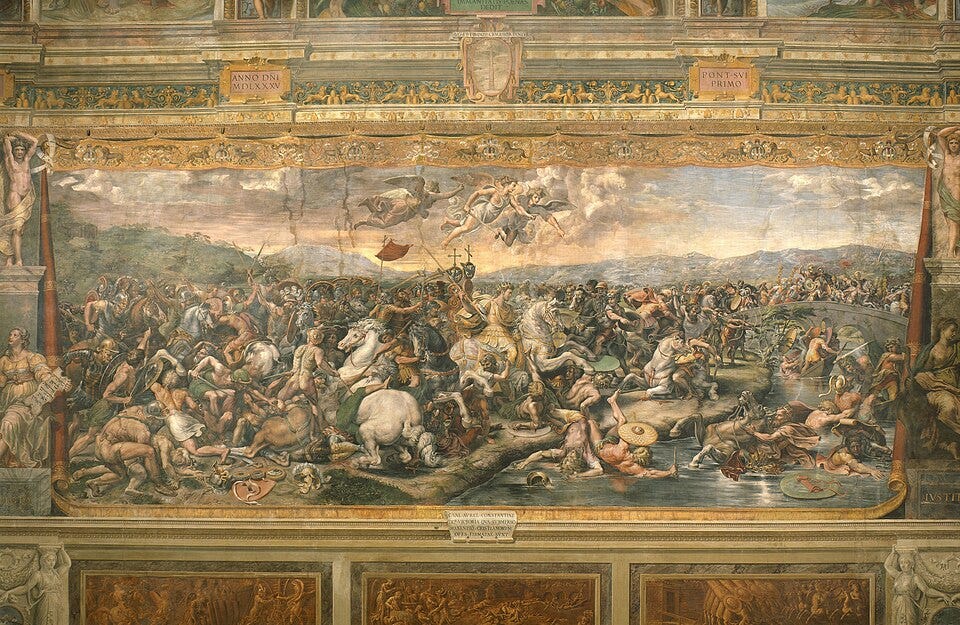
Two men. Two moments. Two signs that shaped the world.
The Temptation to Seek Signs
These are extraordinary gifts, not everyday experiences. Evangelicals are still tempted to search for signs like breadcrumbs from heaven: “Lord, if that dress is still on the rack… if the house doesn’t sell… if that text comes through… then I’ll know.” We bargain with God as if He were a salesman offering cosmic discounts. But God’s signs are not toys for our insecurities. They are revelations of His faithfulness.
The Scriptures are filled with signs, not random hints but divine promises. Jesus is the great sign. His kingdom is a sign. The crushing of the serpent is a sign. Every prophecy and every fulfillment rests on whether God has given a sign. And if God gives a sign, it will come to pass.
So here is the Advent proposition:
Believe the signs God has given in His Word, and hold loosely to the signs you invent for yourself.
The Sign in Isaiah’s Day
Isaiah 7 offers one of the most famous signs in the Bible:
“Behold, the virgin shall conceive and bear a Son, and shall call His name Immanuel.”
Before the sign comes the story, the tension, the fear, the waiting.
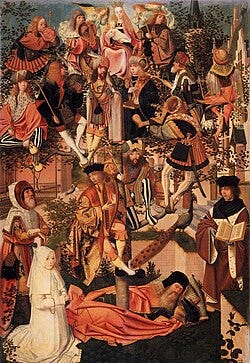
Ahaz, king of Judah, finds himself caught in a web of geopolitical chaos. Assyria looms like a monster in the East. Israel and Syria threaten a coup if Ahaz refuses to join their coalition. The Bible says Ahaz and his people “trembled like trees in a storm.” They lost hope. And when we lose hope, we grasp for the nearest security blanket. We fabricate our signs.
Ahaz reaches not for Yahweh but for Assyria, the very enemy of God. He sends gold stripped from God’s own temple to the pagan emperor. Fear does that. Fear pushes us toward alliances that betray our deepest loyalties.
Isaiah’s Counsel Against Fear
Into this fear, Isaiah arrives with a word:
“Be careful, be quiet, do not fear. These two nations are nothing but smoldering stumps.”
In other words, Ahaz, what terrifies you is nothing compared to the God who stands with you.
But Ahaz will not trust. He cloaks his unbelief with piety. “I won’t test God,” he says. It sounds spiritual, but it is rebellion wrapped in religious language. Isaiah sees through it: “Do not weary God. Ask for a sign.”
And God, rich in mercy, gives one anyway:
A virgin will conceive. A child will be born. His name will be Immanuel, God with us.
Seeing the World Through Isaiah’s Eyes
Advent is God’s invitation to see the world as Isaiah saw it.
The king sees impossible odds; Isaiah sees two smoldering stumps.
The king sees inevitable defeat; Isaiah says, “It will not happen.”
The king trembles before the future; Isaiah announces that the future belongs to a child named God-with-us.
But Ahaz chooses his fears. He chooses Assyria. He chooses unbelief. Advent stands as a warning and a mercy. When we are in the in-between, the “not yet,” we are most tempted to trust our own strategies and signs.
Living in the In-Between
And we all know that place.
Waiting rooms.
Test results.
Hard decisions.
Silent nights that do not feel holy.
The “not yet” is uncomfortable. We want the last page of the story, not the middle chapters.
But Advent is the world between promise and fulfillment. It is the season where God says:
Look at the sign I have given you. Look again. Believe again. Trust again.
God has hung His sign in the heavens like a star. The child owns the future. The child governs the nations. The child is our peace, our hope, our security.
Cling to the Sign
So in the in-between, between Advent and Christmas, between anxiety and praise, between fear and faith, cling to the sign God has given:
Immanuel. God is with us.
And if God is with us, then every other threat is nothing more than a smoldering stump.
Nuntium
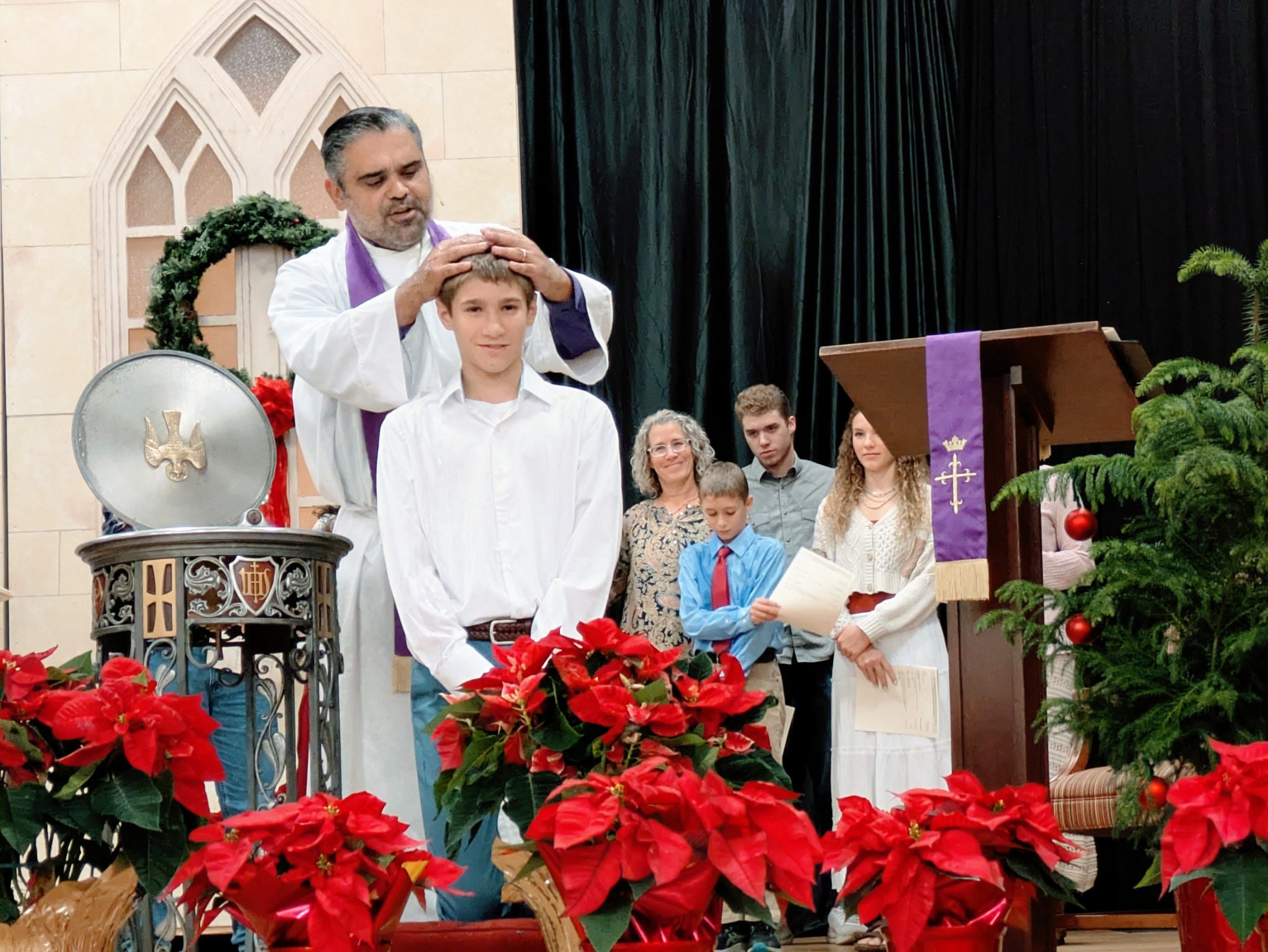
We had four delightful baptisms yesterday at Providence. Two of them were young men who genuinely love the Lord. Their resounding answers were powerful and fervent.
Notations
I am still working my way through Umberto Eco’s The Name of the Rose. The book reads like a medieval mystery wrapped in a theological cloak. A young novice, Adso of Melk, follows his mentor, the sharp-minded Franciscan William of Baskerville, into a Benedictine abbey where books whisper, monks hide secrets, and every hallway feels charged with the weight of centuries.
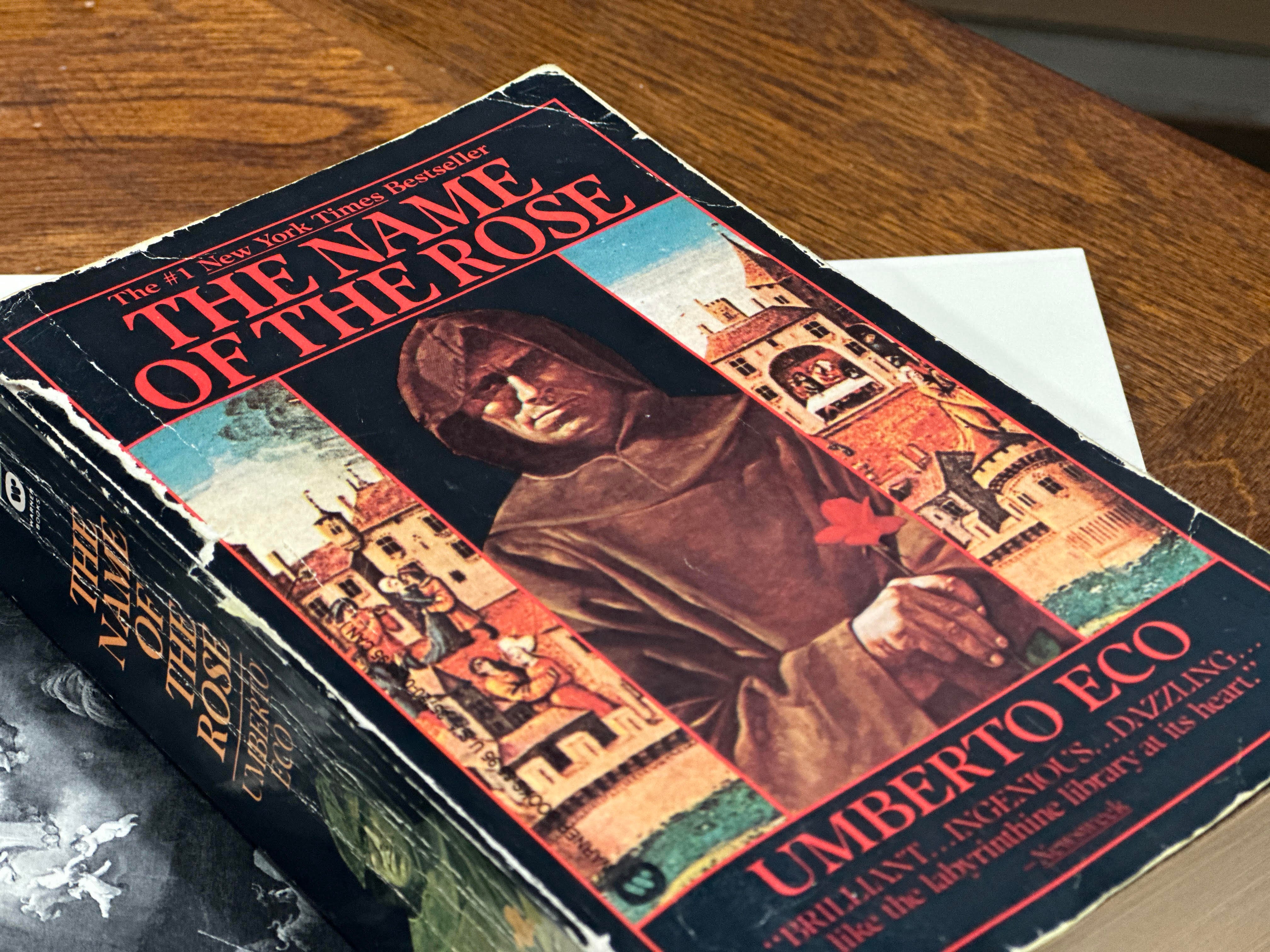
When a series of strange deaths rattles the monastery, William begins to uncover a world where the love of knowledge collides with the fear of its consequences. At the center of the tension sits the abbey’s labyrinthine library, guarded like a fortress and filled with manuscripts deemed too dangerous to touch. Eco paints a world where ideas have teeth, where laughter itself is viewed with suspicion, and where misplaced piety can twist virtue into vice.
The novel isn’t just a murder mystery. It’s a meditation on the power of books, the fragility of authority, and the temptation to shield God with human fear. In the quiet drama of cloistered life, Eco reminds us that truth is never threatened by inquiry, and that joy—yes, even laughter—has a place in the household of faith.