

The Church as Heaven’s Colony to the World
The Church’s call is to the world. She cannot be controlled by outside forces. She must do what she is called to do. She goes out to the world because she bears witness to the Gospel of Jesus Christ. Christ lived a public life, suffered a public death, was raised in a public grave, and ascended in a public space. The Church is to the world what Christ was to the world: a light shining in the darkness, a font calling the unredeemed to the waters of life, and an ambassador speaking on behalf of the great King. Jesus spoke what the Father told Him, and now the Church speaks what the Son has taught us.
The Church goes to the world. Anything less is a bad imitation of the Church. A church that does not go to the world—to borrow from the Beatles—is only half the man it used to be. It is an incomplete assembly.
But the Church’s task is not only to go to the world. If that is all we did, we would become a disoriented body, a cultural committee, or a political headquarters for whichever social or economic causes we happened to treasure most. This is where, I believe, evangelical Christianity has often missed both the boat and the blessing of the Church.
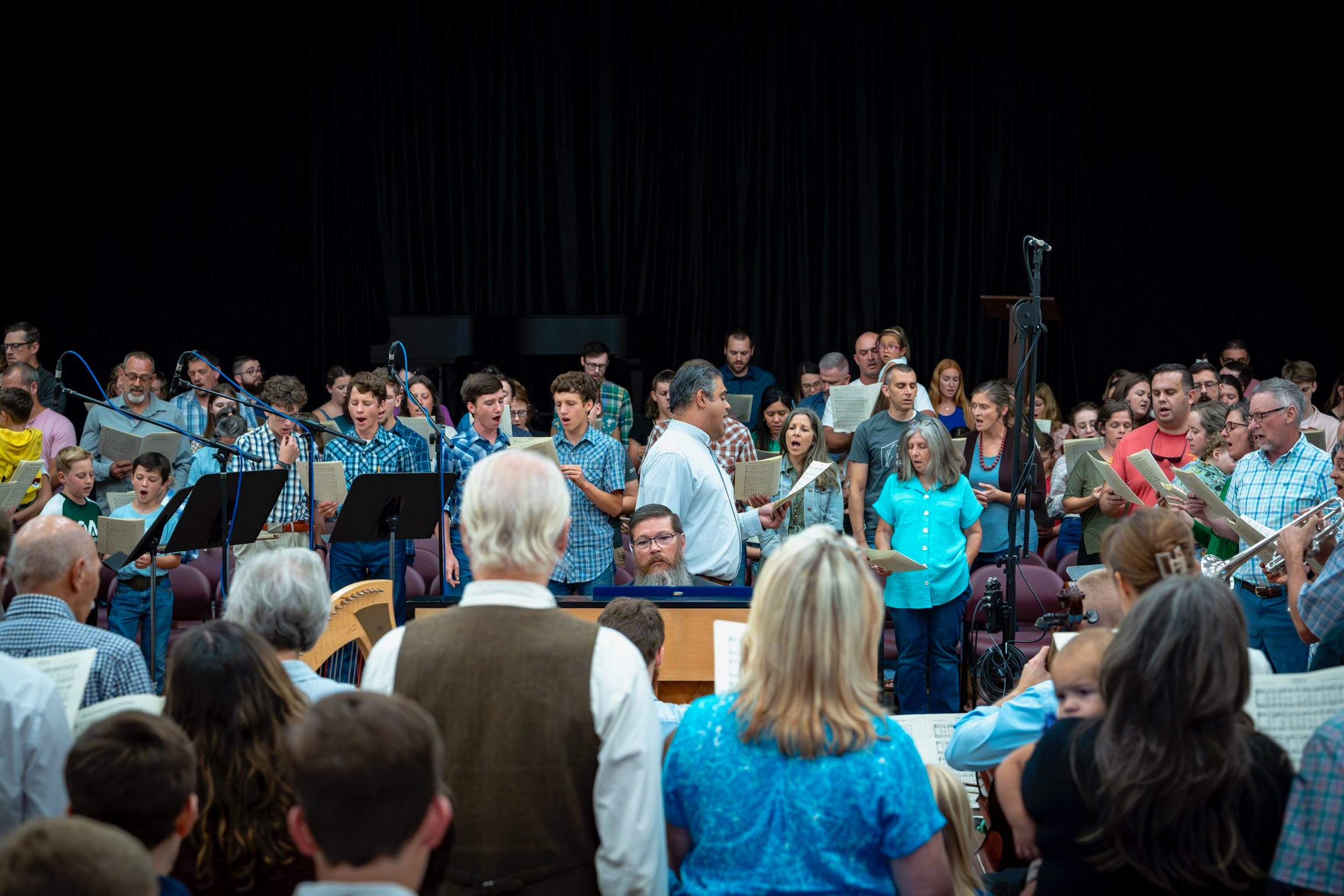
Consider something as mundane as a holiday weekend. There is a high likelihood that many churches will celebrate a Fourth of July Sunday with more emphasis on the American flag than on the Christian calendar, more attention to the pledge of allegiance than to our confession of the Nicene Creed. But the Church is not a colony of the United States government. She is a colony of the Kingdom of God.
Paul tells us in Ephesians 2 that we are fellow citizens with the saints and members of the household of God. That language is decisive. Our fundamental identity is ecclesial. It is churchly. You are first and foremost a baptized member of the body of Christ. Jesus and His Bride shape your identity, so that to leave the Bride is also to leave Jesus.
Paul then sharpens this identity in Philippians 3, saying, “Our citizenship is in heaven, and from it we await a Savior, the Lord Jesus Christ.” That does not mean we are uninterested in earthly life, nor does it mean we are merely waiting to escape this world. Our citizenship derives from heaven, receives its authority from heaven, and has its headquarters in heaven. But heaven’s citizenship is not escapist. It is formative.
Philippi was a Roman colony. Roman citizens were expected to turn that Greek city into a living extension of Rome. Paul’s point is unmistakable. Christians are to live Christianly in the midst of a pagan culture. As Rome extended itself through its colonies, so heaven extends itself through the Church. Christians are called to build colonies of heaven on earth. Or, as James B. Jordan memorably put it, “we are to heavenify earth.”
When Paul’s teaching in Ephesians and Philippians is taken together, the picture becomes clear. The Church is the headquarters of the Kingdom. She is heaven’s colony on earth, the place where heaven is most clearly seen because heaven’s rituals are most clearly practiced. The Church baptizes, marries, administers the Eucharist, worships, and ascends weekly into the heavenly court in covenant renewal. These tasks belong to her alone.
This is why the family is not the Church, and the State is not the Church. Fathers do not baptize. Fathers do not administer the sacraments. Fathers do not officiate weddings. The home is not a church. “Home church” is a modern heresy.
Likewise, the State does not baptize, does not serve the Eucharist, and does not mediate salvation. Though it has an interest in marriage, it does not define it sacramentally. When the Church hands over her citizenship to other institutions, she should not be surprised when she loses her nerve in moments of tyranny, whether under political regimes, cultural coercion, or public crises.
The Church is for the world because she is a heavenly colony, distinct yet central. The family and the State will pass away. The Church will not.
And this brings us to the ways in which the Church is for the world.
The Church Is for the World in Her Living
The Church is for the world first in her living.
She is a holy priesthood and a royal nation. She is dressed for warfare even in her ordinary life. Baptized into godliness, she wears the armor of God with settled confidence. The belt of truth holds her together. The breastplate of righteousness guards her heart. The shoes of the Gospel of peace carry her outward. The shield of faith activates every promise of God. The helmet of salvation marks her baptismal identity. The sword of the Spirit places the Word of God on her lips.

The Church is for the world because Christ is for the world; therefore, the Church puts on Christ. As Paul says in Galatians, “As many of you as were baptized into Christ have put on Christ.” Dr. Peter Leithart has observed that the Church’s unity, holiness, witness, worship, and mission depend entirely on her unique relationship to the Triune God.
How we live as churchmen and churchwomen—in homes and offices, kitchens and bedrooms, farms and suburbs—is how we live for the world. Our daily conduct either announces redemption or contradicts it.
When the Church lives dismissively, she works against the world. When she blesses sexual confusion, mutilation disguised as medicine, moral indifference masked as compassion, and the abandonment of children and families, she is not merely in the world. She is against it.
To be for the world is to be for life. It is to affirm children, families, and generational faithfulness. It is to support mothers and fathers in the hard, holy work of formation. And it is to insist that life flourishes only when it is incorporated into the life of the Church.
The Church Is for the World by Preserving Her History
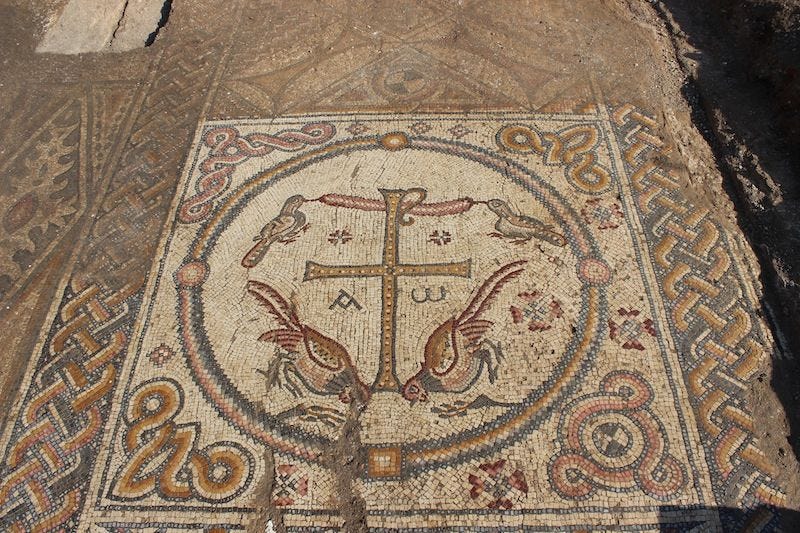
But the Church is also for the world through the preservation of her history.
Paul commands the Thessalonians to stand firm and hold to the traditions handed down by word and letter. There is both a small-t and a big-T tradition at work here.
Small-t tradition refers to the best of Christendom, particularly the Western inheritance that gave the Church space to flourish. This is not nostalgia. It is stewardship. The Western tradition provided freedom of worship, clarity in doctrine, depth in theology, strength in law, beauty in art, and courage in resisting tyranny. Its abuses do not negate its gifts.
Big-T tradition, however, is more fundamental. It is the biblical tradition that begins in the Garden, moves through Abraham, Isaac, and Jacob, and bursts forth in the Church at Pentecost. Scripture alone is the inerrant tradition, and it is this story that shapes all others.
To be for the world is to resist historical amnesia. When false stories replace true ones, the Church responds with education, catechesis, and formation. As Gary North once said, you cannot fight something with nothing. The Church is for the world when she remembers who she is and teaches her children to do the same.
The Church Is for the World in Her Worship
Finally, and most decisively, the Church is for the world in her worship.
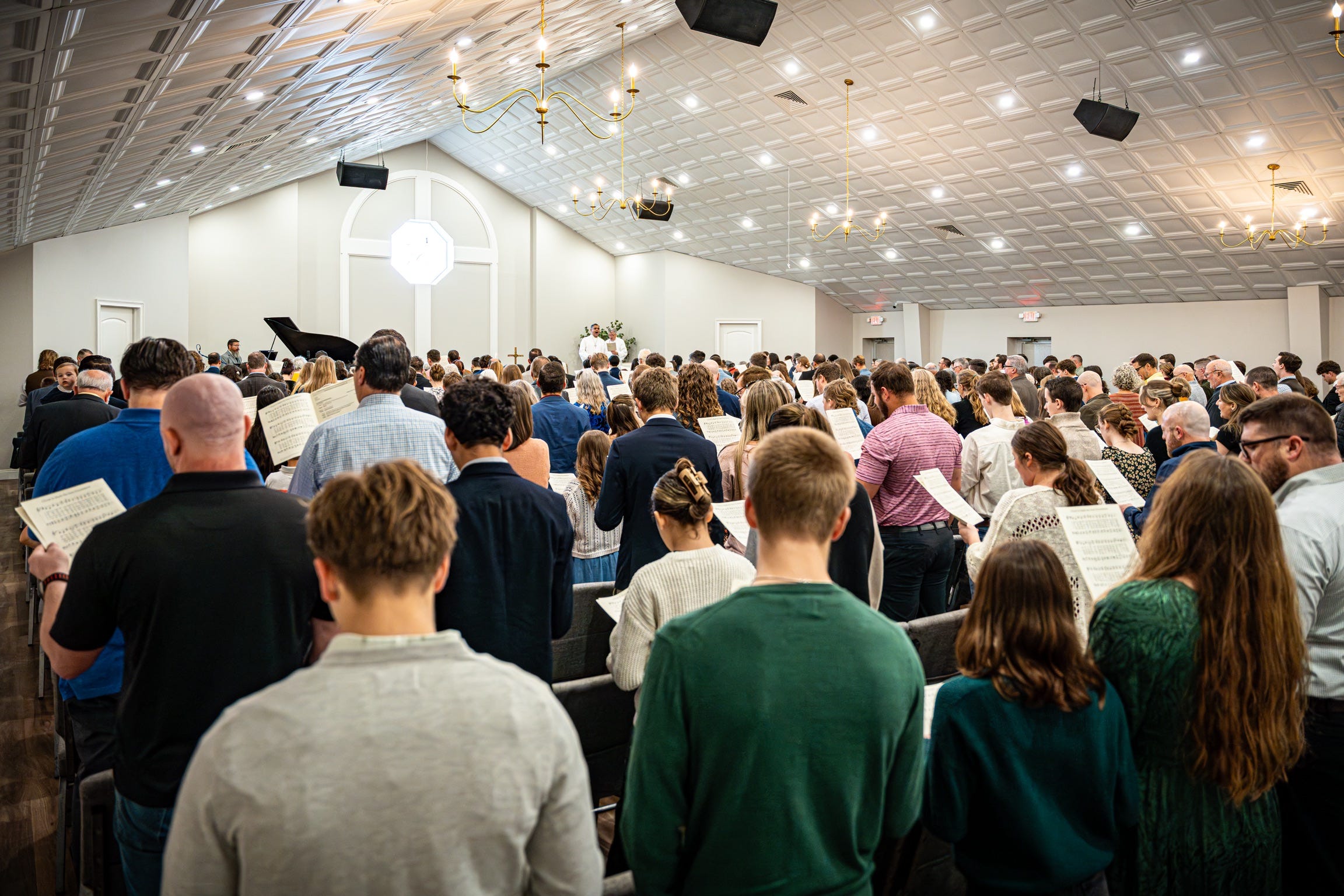
What we do on the Lord’s Day is more central to our humanity than what we do on any other day. Jesus gave the keys of the Kingdom to the Church alone. In worship, heaven and earth meet. Binding and loosing take place. Allegiances are reordered.
When worship becomes optional, the Church ceases to be a blessing to the world. To neglect assembly for trivial reasons is to confess that other kingdoms matter more. Worship is warfare. It is how empires fall and nations are healed.
To fail to worship is to succeed in idolatry. To succeed in worship is to proclaim Jesus Christ as Lord of all. The Church is for the world when she lives faithfully, remembers truthfully, and worships obediently. We go to the world because we are for the world.