

In Genesis 3, we hear a description of man’s attempt to hide from God. It’s a deadly hide-and-seek game. The text tells us that the woman saw the fruit was good for food, pleasing to the eye, and desirable for gaining wisdom. She took and ate, and gave some to her husband who was with her, and he ate it. Then the eyes of both were opened, and they realized they were naked; so they sewed fig leaves together and made coverings for themselves.
Adam and Eve’s attempts to hide from God were in vain. God is, after all, omnipresent. He is everywhere. But the fig leaves of our first fathers have not been destroyed; they have been passed on to the sons and daughters of Adam. We don’t like to be found out, which is another way of saying we don’t like to be known for who we truly are. We can only speculate what would have happened if Adam had said, “Lord, forgive me for disobeying your one law in the Garden, please cover me with your forgiveness.” I tend to believe that if repentance had happened in the Garden instead of a further attempt at a cosmic cover-up, perhaps Adam would have been restored to his garden vocation. But we ultimately don’t know. What we do know is that we have evolved in our capacities for human defensiveness. In other words, we have developed our ability to hide.
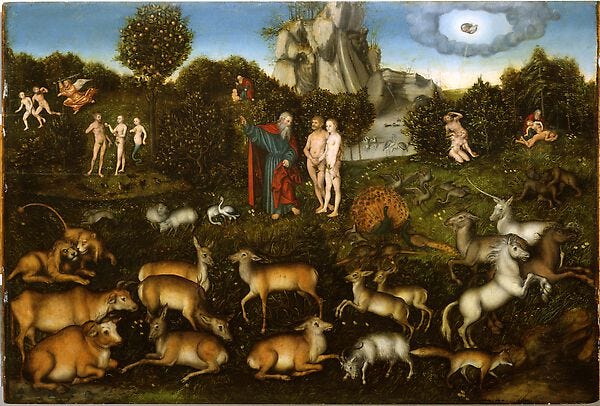
In what ways do we hide from our own metaphorical nakednesses?
Lent begins here. Before fasting, before discipline, before ashes, the Church takes us back to the Garden. The season exposes not merely our sins but our strategies—our long practice of concealment before the face of God.
Our Fig Leaves
We could offer a lengthy list of fig-leaf behavior, but a few examples suffice.
First, we cover up our sins and guilt by trying to make up for them without genuine repentance before God. We cover our sins with niceness so we can feel relieved of the guilt they cause.
Second, we put on fig leaves by fantasizing rather than facing problems biblically. We create our own world instead of dealing with the world we have. If we are unhappy with our lives, we imagine a life where we have it all: money, power, glamour.
Third, there is the classic scapegoating instinct: we attack or blame innocent, helpless, or even inanimate objects—throwing and breaking things—rather than facing our problems. Someone else must be guilty, but not me.
Finally, there is the deceitful art of comparison. “I know I fail every day, but in comparison to her…” or “I struggle with this sin, but compared to that person, I am a saint.”
These and a million other ways are attempts to cover ourselves from ourselves. We act as if we are hidden from God’s ever-present eyes. The reason we invest in these fig leaves emotionally is that we are desperately unhappy. We want to elevate ourselves to unquestionable purity and unstained piety. The problem we all have at the end of the day is that God is not enough for us. We want a second taste of the fruit, and we want more fashionable fig leaves to cover our nakedness.
Lent presses on these habits. It interrupts our disguises. Fasting, prayer, and confession are not punishments but exposures—God’s merciful refusal to let us remain hidden.
The Crown of Thorns
But the way of the Gospel is precisely the opposite. The fig leaves of Genesis 3 must be replaced by the crown of thorns in the Gospels. We cannot take a second bite or undo the first. We all need a new Adam who undergoes all the trials of the first Adam and, seeing the forbidden fruit, says, “No. Thus saith the Lord.”
We need Jesus and his death to show us our true nakedness and need. The Gospel does not merely forgive the old Adam; it strips and reclothes him. Christ does not politely improve our fig leaves but replaces them entirely, clothing us in his own righteous life. At the cross, humanity is exposed in its worst violence, and God is revealed in his deepest mercy. The crown of thorns is not simply an emblem of suffering; it is the new clothing of humanity’s king, the sign that our shame is taken up into his glory.
The Gospel message in this season is simple: do not hide, do not cover up, do not seek more sophisticated fig leaves on the internet, at work, or at home. Seek the Second Adam. Be found out. Let him cover your nakedness with his grace.
Notations
It was great to join our Canadian brothers for a discussion.

We are headed to the airport shortly, on our way to Richmond. Pray for these next six days! For those of you in D.C., I look forward to meeting you all this Lord’s Day.

This is fantastic! 🙌🏻
Prayers for fruitfulness in your meetings, and for stamina in your spirit, body, mind and emotions as you minister and fellowship.