

When the Genealogy Breaks
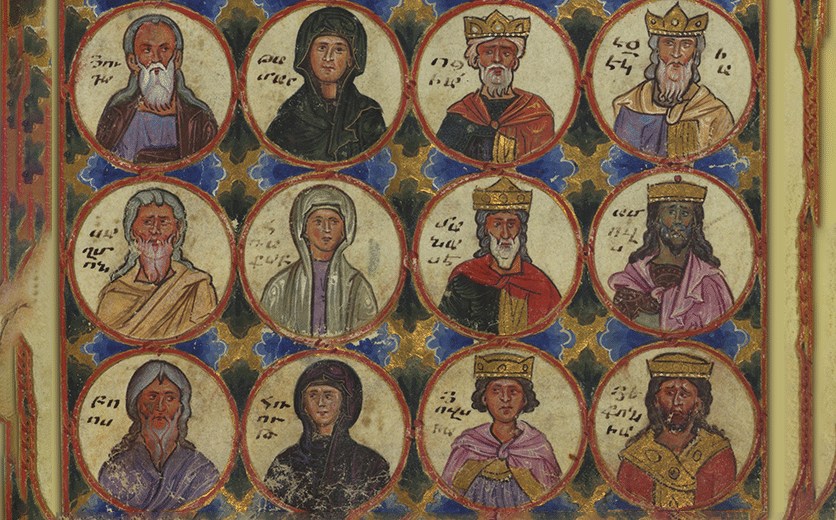
On this last Sunday of Advent, let’s reconsider a well-known text and notice details we often pass over. Matthew’s Gospel helps us do just that. The opening genealogy marches forward with familiar precision—father to son, generation to generation—until, at its climax, the rhythm falters. Joseph is named, Mary is named, but Jesus is not said to be begotten by Joseph. Instead, He is born of Mary.
The break is subtle but decisive. Matthew wants us to feel the interruption. The Messiah does not arrive by predictable human succession. He is not the inevitable result of Abraham’s line. Jesus is given to the line of promise, not produced by it. Before angels appear or dreams are narrated, the miracle is already announced in grammar.
Advent begins here, in the quiet realization that salvation does not emerge from human strength or continuity. It arrives as a gift. The genealogy teaches us that God’s greatest work enters history not as the culmination of our efforts, but as an interruption of them.
The Quiet Righteousness of Joseph

Matthew then draws our attention to Joseph, a man who rarely receives much attention in the text. Mary is betrothed to him. In the Jewish world of Mary and Joseph, a betrothal was far more serious than what we today call an engagement. A young woman would often remain living in her father’s home for a time, but legally, the couple was already considered married. Ending a modern engagement may be awkward, but it carries no legal weight. Ending a betrothal, however, required a formal divorce. The only thing still waiting to happen was the final step of the marriage—the couple coming together as husband and wife.
Joseph’s dilemma is real and painful. The law gives him grounds to expose Mary publicly. Yet Matthew describes him as righteous, and that righteousness expresses itself not in severity, but in mercy. Joseph resolves to divorce Mary quietly. According to D.A. Carson, “the law also allowed for private divorce before two witnesses (Numbers 5:11-31). That was what Joseph purposed. It would leave both his righteousness and his compassion intact.”
This moment reveals something vital about God’s law. When rightly understood, it does not crush the vulnerable; it makes space for mercy. Joseph does not abandon righteousness to protect Mary, nor does he cling to righteousness in a way that destroys her. He searches for faithfulness that preserves life.
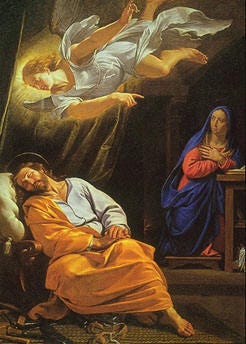
Then God intervenes. An angel appears in a dream and confirms what Joseph could not see on his own: the child is from the Holy Spirit. The miracle does not erase Joseph’s anguish, but it redeems it. His obedience is not wasted. It becomes the very place where God’s purpose unfolds.
Naming the Child, Receiving the Gift
The angel’s instruction reaches its climax in a single charge: Joseph is to name the child. By giving Jesus his name, Joseph adopts him as his own son. To name a child is to claim the child as your own—this is the case even today, but it was even more the case in Jesus’ day. This is the language of adoption.
This is no small detail. Through Joseph’s obedience, Jesus is legally placed within the house of David. The promises stand firm, not because Joseph generated the Messiah, but because he received Him. God’s work advances through faithful adoption.
Here Advent presses close to our own lives. The new creation cannot be fathered by human effort. Only God, by His Spirit, brings salvation into the world. Yet He invites us to participate, not by creating redemption, but by receiving it, naming it, and ordering our lives around it.
Joseph models this quiet faith. He does not speak a word in the Gospel, yet his obedience resounds through history. He receives what he did not plan, trusts what he did not produce, and loves a Son who came entirely by grace.
Advent teaches us to do the same. We wait, we receive, and we give thanks. God’s salvation arrives not as our achievement, but as His gift—and blessed are those who make room for it.