

Our little denomination will meet in a couple of weeks. I suspect the takeaway after Council will be that we loved being with one another far more so than deliberating with one another. The parliamentary stuff will get done decently and orderly, but I believe the main reason our people will travel from across the world is to see old friends and encourage one another in their labors.
Preparing for our meeting has me reflecting on these last three years. These 36 months have been fundamentally different from what I imagined. I knew things were brewing, but I didn’t know the end result of the fermentation. Of course, the detractors were everywhere. The fellas asking questions proved they weren't as innocent as they portrayed themselves. And the detractors were unhappy that we grew despite their efforts to diminish us.

As we come to the Nashville Council in a couple of weeks, it’s become clear that folks who are opposed to our agenda are trying to minimize our growth in at least three ways:
First, they affirm that the denomination grew exclusively from the Covid bump. In other words, we received a booster (pun intended) that accelerated our “virus” into the Reformed world. To this, I simply respond: you protesteth too much, and obviously can’t see what’s happening on the ground level. The CREC has grown most significantly post-Covid as the numbers reveal. And we have grown in larger cities and smaller towns, which confuses folks. While the COVID bump helped bring attention to our small body of churches, that conversation is tertiary compared with the reasons people come to us.
Second, they affirm that the CREC grew because of our political convictions. This criticism is not really a criticism, but an enforcement of the ethos of our 175+ churches. I have said before that there are no Democrats in our churches, and if there are, they are prone to feeling very uncomfortable with our preaching and teaching. It is true that our political convictions will attract many who have seen that there is no light in the Leftist agenda. Further, there is no God and no future. Nevertheless, the political implications are not the sine qua non of the CREC; they are simply the byproduct of a biblical culture. For instance, one cannot treasure the role of motherhood in its creational norm while maintaining leftist ideologies. Indeed, we will overwhelmingly attract conservative families. We do not shy from these convictions.
Finally, they affirm that we have been pushing members from other Reformed congregations to join our tribe. This is the proverbial sheep-stealing. There are a few thoughts to add here, and I begin with myself in Pensacola. In my 18 years in this town, I think I've encouraged someone to explicitly leave their church and join ours only once. And that was after I encouraged him to stay in his congregation far longer than he wanted. Beyond that, I am not aware of cases where our churches are seeking others out. Churches often have a natural relationship with one another. In fact, when we received visitors from nearby churches, we often let their pastors know they visited us. We desire a spirit of camaraderie among the clergy in particular towns.
The blessing of growth is that we have way too much to do on our own. The goal is to minister to the parish, and all these things will be added unto you. As an additional note, I am highly suspicious of folks leaving their own congregations and joining a CREC body, unless there is a tangible reason for concern, public heresy, or geography.
As we gather in a few weeks, I am grateful to God for our growth and am conscious that we must be good stewards of these gifts. Indeed, people are gifts. And we hope to enjoy the benediction of friendships when we come as one.
Notations
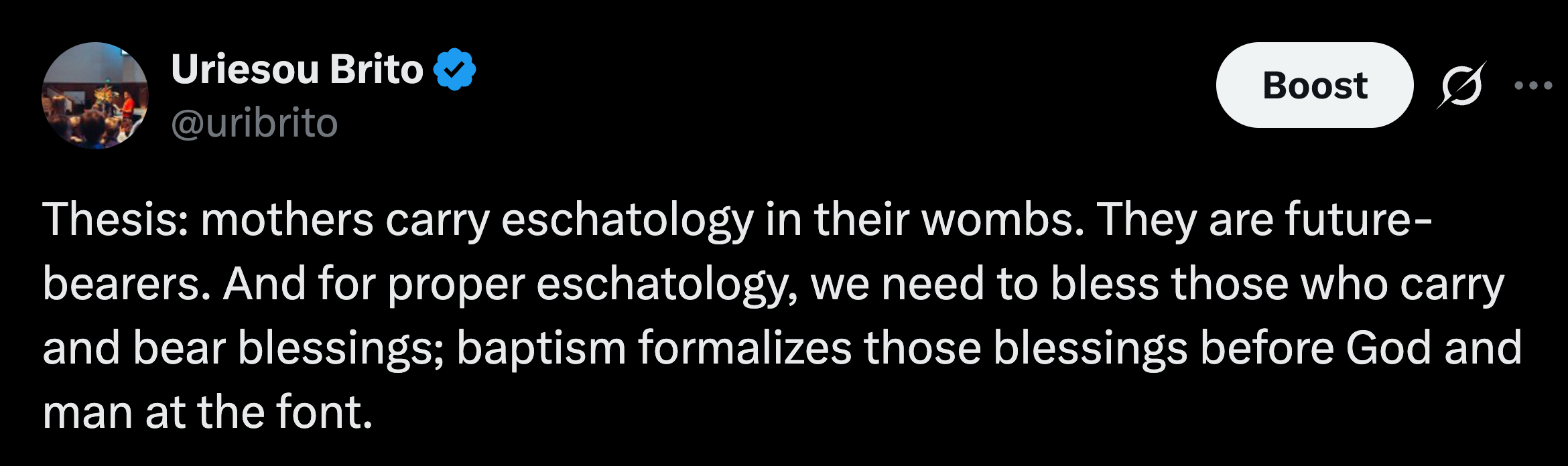
Once you overcome the plethora of people and places, the Iliad becomes a poem on just how a bad temper can mess things up for the cosmos.
I have never treasured the agrarian life that Wendell Berry cherished, but I treasure the intimacy of Port Williams to this day.
Psalm 15 is like an autobiography of faithfulness, and by nature, an anti-biography of prodigals.
Cancer Diary #3
I will keep this one short. You can find my notes #1 and #2 thus far. When I first began to contemplate the matter of cancer, I took on a comical approach to it. It’s a cell rebellion against the good guys. Yes, but then there was a sobering wake-up call. This rebellion has led to lots of people dying. In fact, the C-word leaves sad stories behind. I have buried folks who died of that thing. Fortunately, I began working diligently through the cancer studies and discovered that prostate cancer is survivable if found early; there is a large degree of curability.
When my urologist opened that door of imagination in March, I kept the entire conversation tucked in a corner of my mind. I knew there was a lot of work to do, and I am not going to stress myself into oblivion at the possibility. I took some dietary actions, which were merely reinforced—stay away from carbs. Check. It’s been my habit for almost ten years with keto. Don’t consume too much animal meat. Tough to check. I adore meat of all varieties. Drink more water. Easy to check. And on and on, I noted some principles and abstractions.
My urologist urged me to do an MRI and check my PSA once again in early June of this year. That would be three months from that March consultation; I confess I had rarely thought of cancer throughout those 90 days, except to make some mental notes occasionally. I mean, I knew there was a possibility that this thing could be dangerous, but there were so many tests before arriving at such a conclusion that, inevitably, the tests would win the cell warfare and conclude that my body is clear of all cellular malice.
The day arrived. I went to the imaging center on June 22nd for my MRI. The tech gave me the synopsis of the event and said that I needed to stay still in this catacomb. My words, not his. The coffin, also known as an MRI machine, made strange noises and scanned my body for 30 minutes. They gave me a choice of music, and I promptly told them to put on the Jonny Cash station. I put my earbuds on and quickly entered the tomb. The first few minutes were trying. I am claustrophobic, and I talked myself into staying simply because I told myself stories in there. Stories about life. Stories about what it must be like to see God working in my body. I kept humming Cash songs simultaneously about rings of fire and trains.
The 30 minutes were up. They ushered me out. And then I opened my veins for another set of blood tests. Then, I left. I had to wait for results. I waited. I waited. I waited. Seven days and seven nights. Then I got that phone call on a Wednesday afternoon, and it changed everything.