

It’s been a while since I have contemplated the why of writing. And in particular, the why of writing sermon manuscripts. So, I wanted to offer a few autobiographical snippets.
I have been writing sermons in manuscript form for as long as I can remember. I even think the first sermon I ever preached in 1999 on Deuteronomy 8 was manuscripted. I loved the confidence it gave me. It was the answer to the imperative “Show me the money!” Well, here it is. In Times New Roman and 14-point font.
I loved the art of choosing words carefully to fit the context. I remember thinking that a turn of phrase or a phrase that turns will stick with the general parishioner more so than a lengthy exposition of Hebrews 6:5. I love myself some exegesis, but I just find that the standard exegetical sermon belongs much more behind a lectern than the pulpit. I understand the impetus of Puritans in an age of illiteracy, but I cannot understand 75-minute Puritan preaching in an age of excessive and available literacy.
Writing manuscripts and developing the argument line by line removes the temptation to stray into strange sermonic territories. Now, as I have gotten older and mastered certain topics, it is far easier to offer expositions on them without a manuscript. But I don’t think I would ever dare to do so with newer topics and texts. And while the pastor sometimes recycles material, he is constantly refreshing his repertoire. I have witnessed non-manuscript pastors fall into the temptation to drift into the wilderness, which can leave the speaker and the listener stuck at Mt. Carmel, fighting Baalites, when they need to move on to the Promised Land—a metaphor for the end of a sermon, if you’re following my drift.
I remember reading Annie Dillard’s delightful little book The Writing Life where she notes that to write is to “make the path boldly and follow it fearfully.”(3) It’s unfortunate that many pastors can make the path boldly, but then linger unfearfully along the way, never arriving at home.
Now, I still think that preaching is the power of God through personality. And I wouldn’t want a manuscript to take that away. Yes, it’s divine revelation; holy truth, piercing asunder, and more, but ultimately it’s still a human speaking—delivering a message from God using his style, his mannerisms, and cadence. Yes, all these things can be trained. It should be trained. No one should be content with his style, since no preacher has attained excellence. Like anything, preaching is an art. But still, at the end of the day, you still have a man…weak, sometimes sleepless, and sometimes offering the very last of his energy in the theater of God’s glory.
That said, I still advocate for the manuscript through the personality of a given man. It will make the servant of God a better writer, a better word-selector, and a fuller thinker, able to transition people from one thought to another without confusion or mixture (let the reader understand).
I don’t want to talk here about rhetoric, of which I have at other occasions, but simply to argue for the manuscript as the preacher’s raw canvas at the beginning of the week. Yes, the ol’ fashioned manuscript from which we have derived famous sermons in history, from which we have gained glorious pieces of ever-living history. It’s simply a good habit; a good practice; a good way of learning your way through the vast domain of communication.
And that’s what writing is—communication. Of course, one can be a bad writer for a host of reasons. He doesn’t read. He only consumes media. Manuscript writers who are not good readers will eventually fall into mechanical writing, which entails a lot of words and little to grasp. Or, they will fall into repetitive writers, which entails regurgitating the same ideas with little creativity.
But the manuscript writer who works hard at his craft will learn three things:
I. The art of editing. He will develop an ability to say things creatively without being pedantic. He will be able to say what needs to be said concisely, rather than abruptly. And the difference is important. The concise communicator has worked through his manuscript and realized he has already said too much, and that much of it is too much to consume. The abrupt writer says things too flippantly and carelessly without regard for the listener and reader. He comes across as obtuse for his lack of compassion in communication. And thus, he is understood by a few and overlooked by the many.
II. The art of explaining. He will develop an ability to say things understandably. This means that he will be able to illustrate his ideas in a way that doesn’t belittle the text nor the listener. He won’t be overly explanatory, nor will he be simplistic. He will learn his congregation and therefore know the necessary word count and the time required to achieve the desired goal.
III. The art of ending. He will develop an ability to reach his intended goal. Everyone has had an experience where a minister simply couldn’t figure out where to end or when to end. A manuscript could help you end well, instead of killing us softly with this song. Ending a sermon is one of the greatest gifts to a congregation; a flat or tiresome end leaves the listeners incomplete, but a clear ending takes them to where they need to be.
Of course, I haven’t dealt with how best to articulate a manuscript. There are manuscript readers who put the listener and the listener’s children to sleep. I may touch on it another time, but for now, remember that manuscript helps you to become a better editor, a more gifted explainer, and someone who knows when the Spirit has done his task through you.
Movie Review
I may start writing movie reviews again. They were usually part of my Saturday morning Facebook posts, where I briefly reviewed an older movie for the modern world.
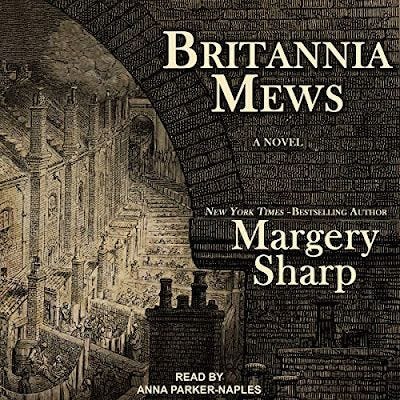
I’d like to add a few words to the lovely 1949 film The Forbidden Street Britannia Mews. The movie is based on the best-selling novel by Margery Sharp, and it was not recommended for children at the time. Why—because there were a few kisses and the discussion of various mature themes. It’s hard to imagine the movie industry's decline today.
The lovely Maureen O’Hara plays Adelaide, a privileged young woman who defies her family by marrying an impoverished artist. Some will remember her from Miracle on 34th Street (1947). Adelaide pushes the envelope of social acceptability in her London context and decides to marry an artist whose reputation as a womanizer and drunk comes into play quickly in their marriage. Her failure to heed the cultural environment (Christianized London) where integrity and the honor of her parents are honored thrust her into Britannia Mews, a place known for its degradation. Her husband lacks the ambition to provide for her in the art world, but has a gift for making puppets, which Adelaide thinks unfortunate.
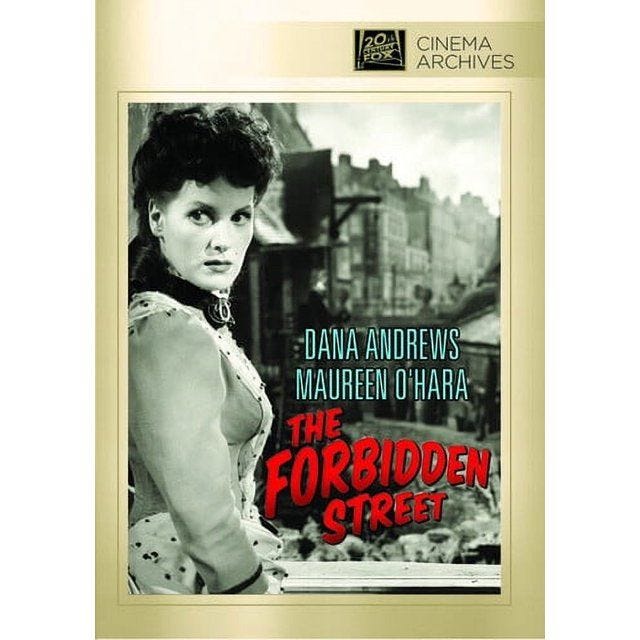
The rest of the movie is a form of romantic and dramatic redemption for Adelaide, who is now entangled with the bribery and bullying of an old “witch” in the community and is now navigating a new life in Britannia Mews. The story carries a lovely series of providences that bring Adelaide to a happy ending, and resurrects the puppets for a new life. Meanwhile, she plays within the confines of 1950’s London, and the integrity of marriage that the society requires.
I’d give it a 6 Britos!
I remember attending a session at Shepherds Conference one year. The speaker chastised those of us who used a manuscript to preach from. "You're not Steve Lawson!", he exclaimed. The retort in my mind was, "And we're not all you!"
I find a manuscript helpful in all the ways you've described, and I encourage our session to do the same.
I also recall hearing a very famous Southern Baptist preacher who used no manuscript, and his sermon had no focus, no flow, no landing. He was all over the place. Another example for me to see in real time the benefits of a manuscript.
Pastor Brito, thank you for your content. We are a small church plant in Western North Carolina seeking, by God's grace, to have a church ordered by weekly covenant renewal, festive gathering, and gospel activity in the community. As one of the pastors, I have found it difficult to manage the length of the service with brief comments at the time of confession, the time of communion, and then the sermon itself. I noticed your sermons rarely go beyond 30 minutes. Is this an intentional length in order to make the service flow more naturally and not feel like the sermon is the main point? Thank you in advance. Your work is a blessing to many, including myself.