

The Table That Unites the Body
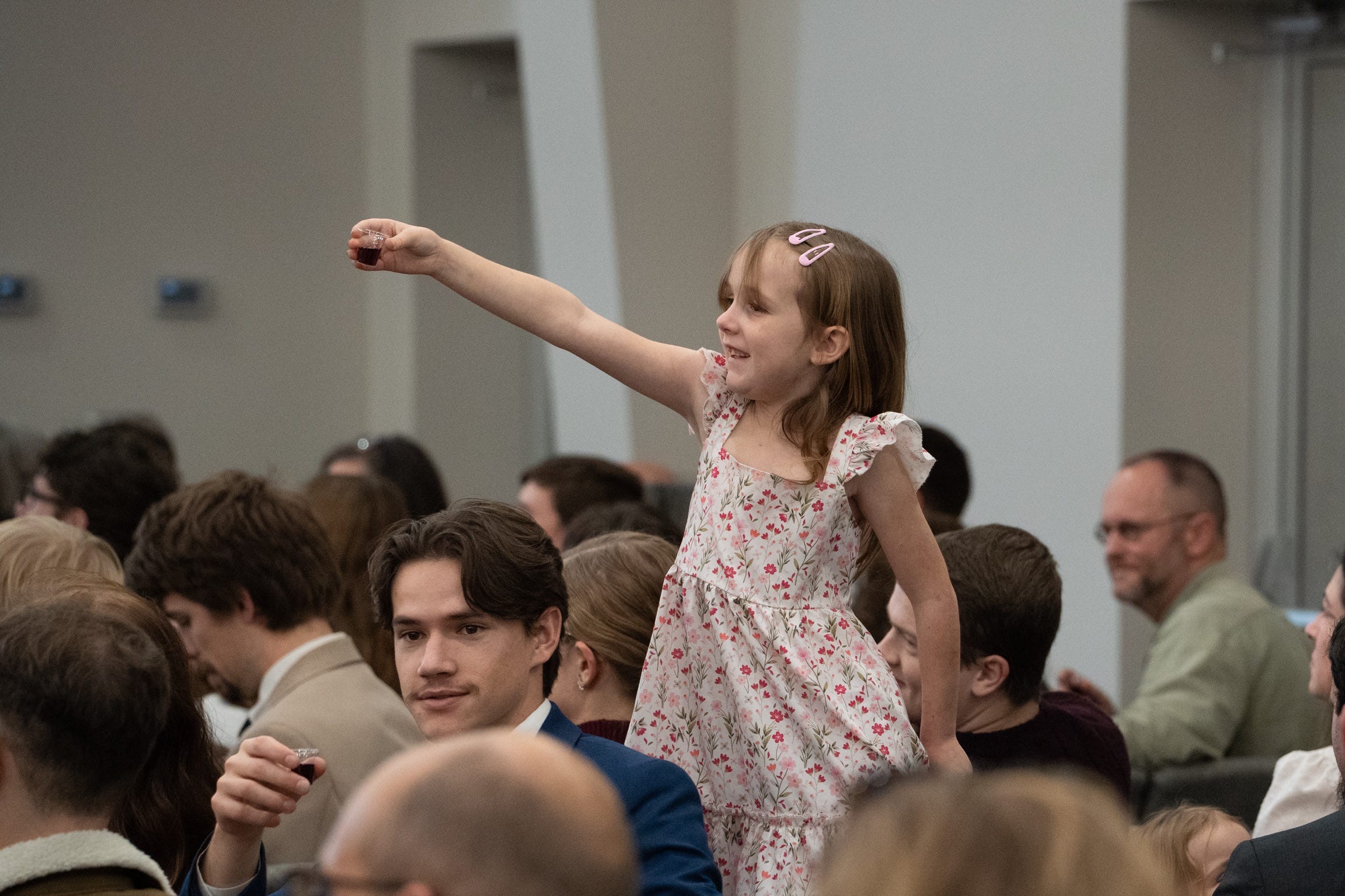
Unlike some traditions, Providence Church practices paedocommunion, which means that every baptized child in this congregation is welcomed to the table of Jesus Christ. This is not a novelty for us, nor is it an attempt to be provocative. It is, rather, our attempt to take seriously what the Scriptures say about the nature of the Table and the nature of the Church.
The Apostle Paul tells us that one must “discern the body” before coming to the Table. But we must be careful not to turn that phrase into something foreign to the text. To “discern the body” is not to produce a theological dissertation on the atonement or to demonstrate a sophisticated grasp of Good Friday. Paul’s concern in I Corinthians 11 is not intellectual insufficiency, but relational disorder.
The Corinthians were dividing the Church. Some ate while others went hungry. Some feasted while others were humiliated. They had turned the Lord’s Supper into a display of status and fragmentation. As I have argued elsewhere, “the proof that a Christian—young or old—must display is his desire for unity in the body of Christ, not his performance of self-introspection.”
Paul’s rebuke is not aimed at the simple, but at the divisive. It is not the child who fails to discern the body, but the adult who despises it. Practically, all one has to do is bring a child to the center of a group. How do people react? Does it provide disunity? Or does it draw people closer? The answer is obvious. Children draw people together.
So, what does it mean to discern the body? It means to act in such a way that unites the body. It means to recognize that this Table is not a private meal, but a family feast. It means to come not as an isolated individual, but as a member of Christ’s people. If you are a divider of the body, if you harbor contempt for your brother, if you erect barriers where Christ has torn them down, then you are not discerning the body. And I would urge you to refrain.
But children, as in the days of Jesus, are welcomed. Their presence does not fracture the assembly; it strengthens it. They come not with agendas, but with open hands. They come not to assert themselves, but to receive. And many times, unlike many grown-ups, they have little difficulty desiring the good and unity of the body.
The Covenant Pattern of Faith and Formation
To understand why this is so, we must return to the basic pattern of Scripture. The Bible does not present faith as an abstract, self-generated achievement detached from relationships. It presents faith as something cultivated within the bonds God Himself has established.
As James Jordan has argued so forcefully, we must think back to the garden. If Adam and Eve had not sinned, their children would have grown up knowing the Lord. They would not have needed to “decide” for Him in some isolated, self-conscious moment. They would have been born into a world of fellowship, into a network of relationships that naturally directed them to God.
And even in a fallen world, we see glimpses of this restored pattern. John the Baptist, still in the womb, leaps for joy at the presence of Christ. That is not mere instinct; it is a response of faith. As Jordan puts it, “I believe a fetus can have faith.” Not a fully articulated theology, but a real, living orientation toward God.
This should not surprise us. God’s ordinary way of working is through households. Children are born into relationships. They begin by trusting what their parents say. And that is not a defect; it is God’s design. If God had intended otherwise, He could have created fully formed adults capable of making immediate, independent decisions. But He did not. He created infants who grow, who learn, who trust, and who gradually mature in their understanding.
As Jordan observes, children move through stages. They begin by relating to God as Father, climbing into His lap, so to speak. Later, they grow into deeper and more self-conscious forms of relationship. But the early stage is not inferior; it is foundational. It is the beginning of covenant life.
And if our children are truly part of that covenant, if they are genuinely members of the household of God, then we must ask: why would we exclude them from the family meal?
The Restoration of the Family Table
At its heart, the Lord’s Supper is a meal. And not just any meal, but a family meal. It is the place where Christ gathers His people and feeds them as one body.
In Corinth, that vision had been shattered. The architecture of their homes even reinforced division: the wealthy in the dining room, the poor in the atrium. The best food for some, scraps for others. It was, as Pliny the Younger described, a setting where “the best dishes were set in front of himself and a select few, and cheap scraps… before the rest.”
Paul will have none of it. The Supper is not a place for hierarchy, but for unity. It is a memorial, not in the sense of private nostalgia, but as a corporate proclamation of what God has done, is doing, and will do in Christ.
To come to the Table rightly is to recognize that Christ has broken down barriers. It is to see one another as participants in the same redemption. It is to eat and drink together as one people.
And this is precisely why the inclusion of children matters. The Church is not a collection of autonomous individuals, but a household. It is composed of young and old, mature and immature, all bound together in Christ. When we exclude children, we subtly communicate that they are not yet full participants in that body. But when we welcome them, we testify that Christ has united the whole Church into one great banquet.
This does not mean that all distinctions disappear. Children will grow. They will come to deeper understanding. They will wrestle, and some may rebel. But the starting point matters. They begin not as outsiders striving to gain entry, but as insiders being nurtured in grace.
So we bring them. We place the bread in their hands and the cup to their lips. Not because they understand everything, but because they belong. Not because they have mastered the faith, but because they are being formed by it.
And in doing so, we bear witness to the gospel itself: that Christ gathers a people, not merely individuals; that He restores what was broken; that He builds a household where all—young and old—are fed at His Table.
This is the Table that unites the body. And this is why we welcome the children.
These two quotes are at the very heart of the matter. How often those who wish to "protect" children from the table, completely throw John 17, all of Christ's words about children and infants, as well as ignore Paul's admonition for unity.
"Paul’s rebuke is not aimed at the simple, but at the divisive. It is not the child who fails to discern the body, but the adult who despises it. Practically, all one has to do is bring a child to the center of a group. How do people react? Does it provide disunity? Or does it draw people closer? The answer is obvious. Children draw people together.
So, what does it mean to discern the body? It means to act in such a way that unites the body. It means to recognize that this Table is not a private meal, but a family feast. It means to come not as an isolated individual, but as a member of Christ’s people. If you are a divider of the body, if you harbor contempt for your brother, if you erect barriers where Christ has torn them down, then you are not discerning the body. And I would urge you to refrain."
Thanks again Uri. That is what we practice at King's Kirk as well...as you know. See you this coming Lord's Day the Lord willing.